

Impacts of the Government of Zambia’s Response to the COVID-19 Pandemic on Poverty

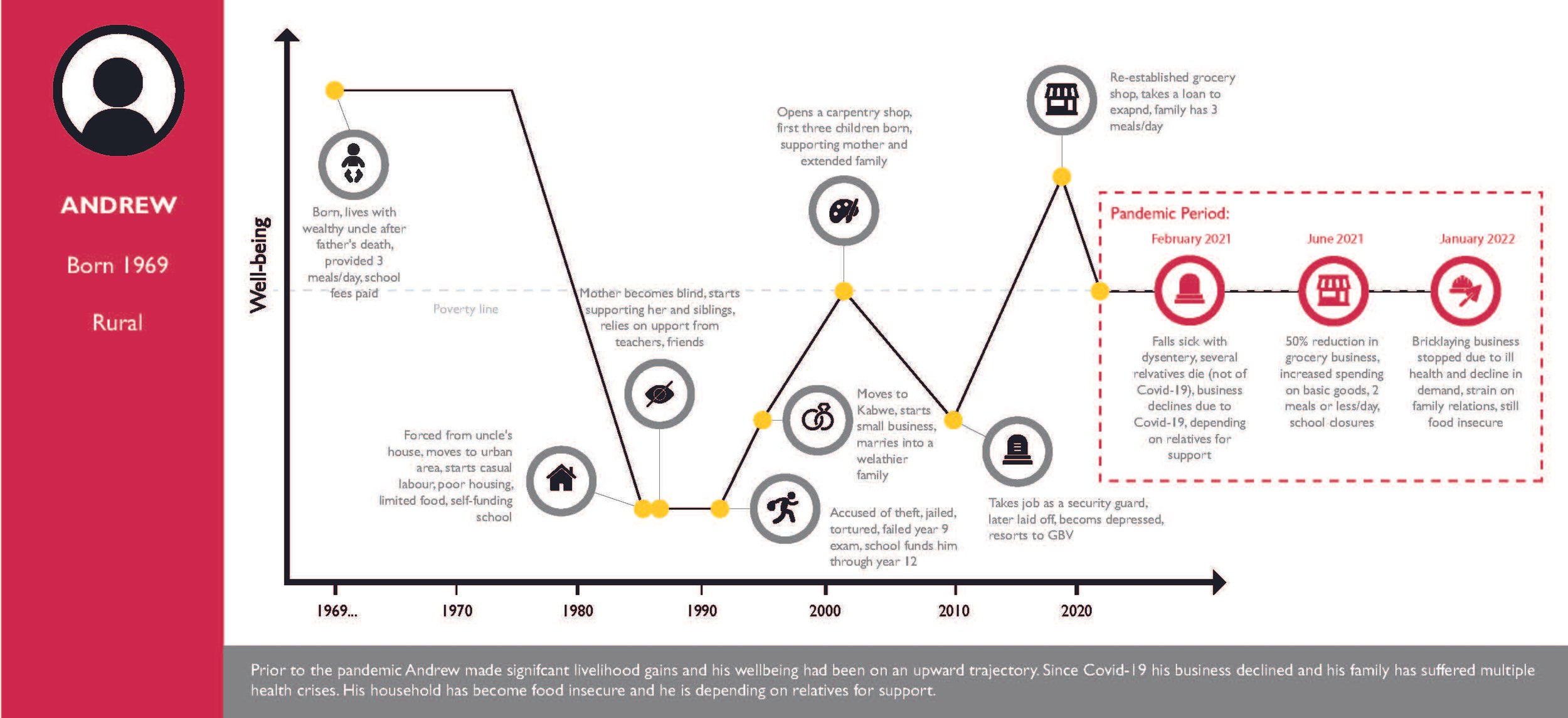
COVID-19 tested the social welfare system that successive governments have been building in Zambia over the last two decades. Zambia had one of the highest poverty rates in the world going into the COVID-19 pandemic as well as overlapping vulnerabilities related to climate change, macroeconomic instability, and high external debt. These and other challenges exposed many people living above the poverty line to impoverishment and pushed households living in poverty further towards destitution.
Civil Society for Poverty Reduction (CSPR), the Chronic Poverty Advisory Network (CPAN), and the Institute of Social and Economic Research (INESOR) have been monitoring the impacts of the pandemic on people living in or near poverty in Zambia since early 2021 in three districts – Lusaka, Kabwe and Chipata - about the reach and impact of these policies. This policy brief reviews the Government of Zambia’s key policies to mitigate the impacts of the COVID-19 pandemic on people living in or near poverty and summarises insights from people affected by these policies about what they have achieved and how they can be improved.
Poverty, Hunger and Jobs: Pandemic Update and Recovery Prospects

The COVID-19 pandemic and intersecting crises— including climate change, conflict, debt, and the ‘triple F’ crisis (food, fuel, finance)— have reversed progress on a range of the Sustainable Development Goals (SDGs), increasing the number of people in poverty, contributing to a dramatic rise in hunger and food insecurity, increasing gender inequalities, and constraining the effectiveness of interventions to promote pro-poor livelihoods and decent jobs.
In many countries, the post-COVID-19 recovery has been slow and incomplete. To promote the joining up of SDGs (1- no poverty, 2- zero hunger, 8- decent work and economic growth), CPAN/IDS, IFPRI, Southern Voice, and the Global Donor Platform for Rural Development co-convened a three-day virtual international workshop in June 2023 on “poverty, hunger and jobs”. Its aim was to synthesise latest knowledge and data about the effects and the effectiveness of policy responses on these issues, and to work out its policy/programming implications to re-establish positive development progress on hunger, jobs and poverty.
This brief outlines key takeaways and recommendations from the workshop presentations and discussions.
Chronic Poverty Report 2023: Pandemic Poverty
The Chronic Poverty Report 2023: Pandemic Poverty sets out to investigate the highly negative effects of the Covid-19 restrictions, and most importantly, the success or otherwise of the measures pursued to mitigate those effects on people in and near poverty.
Read MoreThe Role of Local Resources in Mitigating the Impact of Covid-19

Governments often found it challenging to mitigate the negative socioeconomic impacts of Covid-19 for households in and near poverty. Local efforts were critical to supplement government measures and implement government guidelines.
In Ethiopia, these efforts mobilised a pre-existing, government supported village network system. In Bangladesh, a network of formal and informal strategies played an important role in increasing assistance to people affected by the pandemic, including through industry-based corporate social responsibility (CSR) initiatives.
This policy brief outlines local responses to and lessons learnt from mitigating the negative socioeconomic impacts of Covid-19.
Delegating Authority in Bangladesh to Manage the Covid-19 Pandemic

Bangladesh, like most countries, grappled with the harsh conditions of Covid-19, with little infrastructure and set up of institutions to deal with the consequences of the pandemic.
A country with a large informal economy, and an even larger export manufacturing sector it is highly dependent on, the Bangladesh government had tough decisions to make when it came to saving and protecting the lives of millions, as well as ensuring continued economic activity to save livelihoods.
To strike a balance between protecting both these important factors, the central government adopted a unique approach of mobilising and enabling the local government to implement a lot of measures. Their approach was area centric, in that the local government recognised the needs of their districts, and that looked different for different areas of the country, whether rural or urban, agricultural or industrial focused.
This policy brief outlines some of the local measures and responses that worked in minimising the impact of Covid-19 on the dense Bangladeshi population.
Mitigating Learning Disruption During Covid-19: Evidence from India

Long school closures in India during the pandemic caused significant learning disruption, with particularly adverse consequences for marginalised girls and boys.
Data from large-scale representative surveys does not show a massive fall in enrolment because of the closures. However, low levels of basic reading and maths skills among school-age children are concerning. In response, various centrally managed interventions took place during the pandemic (e.g. to encourage enrolment, including through social protection).
Schools also undertook measures with a more direct bearing on children’s learning. Continued efforts are needed to reach severely disadvantaged children who are not enrolled.
Migrants’ Vulnerabilities in India During the Pandemic

Migration promotes agglomeration of economic activity in more productive locations and improves employment opportunities for households in less developed regions, alleviating poverty and boosting shared prosperity through remittances.
Most internal migrants’ livelihoods are characterised by circular mobility, mandatory physical presence at work, temporary or seasonal nature of work, and informality. Beside their temporary residential status and lack of access to government welfare schemes, most migrants are vulnerable workers.
The Covid-19 pandemic made them more vulnerable due to its mobility restrictions and total shutdown of the economy during lockdown. The extent of precarity migrants faced depended on existing policies, and how agile policymakers were in responding to the crisis and introducing new policies to protect vulnerable migrants.
Lessons on South Africa’s Social Protection Response to Covid-19

South Africa stands out for its social protection response to Covid-19, especially regarding the expansion of programmes, number of beneficiaries and benefit amount.
At the height of the pandemic, the government introduced the emergency Social Relief of Distress (SRD) grant was introduced for over 10 million unemployed adults and informal workers through a digitised system.
Despite successes in expanding the grant system, digitisation of the system presented challenges and led to exclusion errors. An alternative to the country’s school feeding scheme, the National School Nutrition Programme which regularly fed around 10 million children, could not be found.
Responding to Polycrisis in Ethiopia and Kenya

The spread of Covid-19 was layered on to various intersecting crises (‘polycrisis’), worsening people’s lives and weakening governments’ responses to the pandemic. Many responses to multiple crises focus on single hazards.
This brief highlights effective responses to Covid-19, drought and conflict from Kenya and Ethiopia, which may offer lessons for future policy and programming that equitably address multiple crises.
It focuses on two examples of how governments and local actors have sought to strengthen people’s ability to cope with multiple crises: through collaboration at different levels of governance across sectors; and strengthening resilience through water management.
Measures to Mitigate Pandemic Restrictions
Policy responses to the Covid-19 pandemic in the global South were dominated by movement restrictions and lockdowns imposed in the global North, and not always relevant to the countries or geographical areas where they were imposed.
Countries must be free to decide how to manage a global crisis, so their governments can take decisions that are in the best interests of their citizens, with specific reference to the poorest people, whose lives are already challenging. Many countries’ political and public finance systems could not support mitigating measures to compensate the effects of the lockdowns and restrictions.
Such measures rarely made up for the job losses, income reduction and erosion of social capital caused by closing economies. They also rarely reached some of the groups most affected – including those in the urban informal economy, poor migrants and poor women.
The Pandemic, Informality and Poverty: Rethinking Economic Policy Responses to the Informal Economy

Informal workers, who represent over 60 per cent of all workers globally, were disproportionately impacted by the pandemic restrictions and recession.
The pandemic exposed the pre-existing disadvantages that informal workers face as well as the essential goods and services they provide.
To reduce poverty and inequality going forward, it is important to build on this new-found recognition of the contributions of informal workers and promote an enabling policy and regulatory environment towards them.
“We will die in poverty before dying by COVID”: Young adults and multilayered crises in Afghanistan

Afghanistan experienced an extraordinary situation in 2021 that presents a complex example of how an intensified level of conflict and the global COVID-19 pandemic of added to an increasing prevalence of drought due to climate change has been affecting people’s livelihoods from different angles. In pre-August 2021, the country experienced record-level violence across the provinces. This was followed by the gradual fall of districts, provinces and finally the capital Kabul into the hands of the current de facto authorities, the Taliban.
Meanwhile, like any other part of the world, Afghanistan also experienced the impacts of the COVID-19 pandemic, which hindered people’s access to jobs, health care and different sources of revenue. Alongside this, the second-worst drought in 4 years (IFRC, 2021) has widely affected the livelihoods of the majority of people who rely on agriculture and livestock as the sole source of income.
There has been limited research into how these situations have combined to affect livelihoods and wellbeing in Afghanistan. This article attempts to advance understanding of this issue and promote research that investigates overlapped crises.
Vulnerability in Afghanistan before and during the shift in power

Afghanistan is experiencing contemporaneous crises including drought, floods, COVID-19, insecurity, political and economic crises, and displacement, all of which pose serious risks. This layering of crises heightens the probability of welfare loss, which has worsened since the transition of power, and the subsequent suspension of development aid. Though there has been an emergency response from the international community, the scale of macro-level challenges is considerable, and in turn may also compound vulnerabilities at the micro level for population subgroups, such as people in or near poverty, as well as certain groups like women and girls, persons with disabilities, and displaced populations. Though poverty is not synonymous with vulnerability, it is one of the factors that can heighten vulnerability. This brings up the question that if a large share or majority of the population is vulnerable, what is the value in identifying vulnerable groups? Are there degrees of vulnerability, or intersections of contexts and characteristics that may limit resilience capacities and amplify vulnerability that need to be considered?
This paper identifies vulnerable groups in Afghanistan and examines how they can be supported through humanitarian and wider assistance provided by the Foreign, Commonwealth & Development Office (FCDO). It synthesises a range of quantitative and qualitative data sources from 2019 to 2022, spanning multiple household and settlement survey datasets and qualitative in-depth interviews with households and key informants to understand risks and resilience factors that could contribute to vulnerability reduction. This is complemented with a rapid literature review of vulnerability in Afghanistan based on journal articles and grey literature primarily over the last decade to offer a longer-term perspective. The study was commissioned by the FCDO’s South Asia Research Hub to better understand who is most vulnerable in Afghanistan and how can they be supported through humanitarian and wider assistance provided by FCDO, especially since the August 2021 shift in power.
Authors: Vidya Diwakar, Ihsanullah Ghafoori, and Orzala Nemat
Tanzania Covid-19 Poverty Monitor: Urban and peri-urban areas

Tanzania had its first and most serious wave of Covid-19 from March to June 2020, and adopted the policy responses of partial lockdown, school and international border closures, and banned mass gatherings except religious ones which could be attended with social distancing. In June 2020 some of the strict measures like closing bars, hotels, schools, social events and other businesses were relaxed with some precautions while hygiene and sanitation practices remained in place. The then President of Tanzania, John Pombe Magufuli, instructed to stop publishing data on Covid-19 cases and deaths in late April 2020 for several reasons. First, he was sceptical about the corona testing kits, the process and the integrity of the laboratory technicians. Second, giving data to the citizens was of no help but created fear and panic. He declared that people should pray and rely on God and on traditional medicines while doubting Covid-19 tests. The second and third waves of the pandemic occurred from November 2020 to March 2021 and from June 2021 to October 2021 respectively. The fourth wave occurred from November 2021. President John Pombe Magufuli passed away on 17th March 2021. After his death his successor, President Samia Suluhu Hassan, resumed the publication of Covid-19 cases and deaths and committed Tanzania to a vaccination programme.
She also opened up for external financial assistance to support government’s efforts in overcoming the Covid-19 pandemic in the country. While lockdown was short lived and partial, the fears induced by the pandemic lived on in people’s cautious healthcare practices through to the end of the second wave of Covid-19 (November 2020 to March 2021). The healthcare practices included wearing a face mask, washing hands with soap and running water and avoiding handshakes. And some of the effects of the lockdown, healthcare practices changes resulting from the pandemic, and global economic pandemic related trends have lived on till the present. The third and fourth waves of the pandemic occurred from June 2021 to October 2021 and from November 2021 to the time of the research on which this bulletin is based (March 2022) respectively.
Covid-19 monitoring in rural Tanzania: The pandemic exacerbated pre-existing factors negatively affecting wellbeing
Tanzania avoided a recession due to Covid-19, mainly because it had little stringency in its Covid-19 policy responses. However, the country suffered a decline in real GDP growth rate, and poverty incidence declined marginally between 2020 and 2021. This Bulletin is based on a study which was conducted to disaggregate understanding of who has been affected among the poor and vulnerable, investigate the intersecting disadvantages which may have made it harder for some households and individuals to remain resilient while others were impoverished, and contextualise Covid-19 impacts within a broader examination of the multiple causes of poverty dynamics before and during the pandemic.
The study was conducted in Kongwa and Kilolo Districts, Tanzania, through 48 interviews, which included 27 Life History Interviews (LHIs), 12 Focus Group Discussions (FGDs), and nine Key Informant Interviews (KIIs). It was found that Covid-19 exacerbated pre-existing factors which were negatively impacting interviewees’ incomes but that it did not have adverse economic effects in some areas such as in Rural Kongwa District.
The poor were most affected by an inability to meet costs to practice preventative measures against the pandemic and subsequent treatment if they succumbed to it, and lower earnings due to missed casual labour work. The non-poor were also affected by higher costs incurred on preventive measures against the pandemic and getting treatment if they succumbed to it, and also by a decline in customers for their businesses, and rises in costs of inputs while the prices of products and other goods they traded declined. The main factors for wellbeing improvement before the pandemic were a diversification of crops planted, the acquisition of more land for agriculture, agricultural mechanisation, and doing non-farm businesses besides farm activities. The main factors for wellbeing improvement during the pandemic were avoiding the high costs on Covid-19 infection prevention and treatment, increases in customers after Covid-19 diminished, and getting a loan and using it successfully on income-generating activities. A big policy implication of the findings is that measures to prevent impoverishment are generally very inadequate.
In order to prevent impoverishment and keep poverty declining, even in the face of pandemics like Covid-19, it is recommended that Tanzania needs to target more chronically poor and vulnerable people by strengthening measures against destitution (movement into Wellbeing Level, WB 1); take proper measures for non-pandemic factors which impede poverty reduction, even when there is no pandemic, such as climatic factors, qualities and quantities of agricultural inputs and technologies, agricultural marketing and selling, and taxation on various businesses; and improve social services including education and health.
Authors: Lucia da Corta, Kim Abel Kayunze, Judith Samwel Kahamba, Constantine George Simba, Andrew Shepherd, and Halima Omari Mangi
Sustaining escapes from ultra-poverty: A mixed methods assessment of layered interventions in coastal Bangladesh
Bangladesh has seen its poverty rate, the proportion of people living on less than USD1.90 a day, reduce drastically, from 34.2% in 2000 to 6.6% by 2019. However, households who have escaped poverty remain vulnerable to re-impoverishment, and there are still people in the country living in ultra-poverty marked by limited capabilities and assets.
This research explores the potential of multi-sectoral integration and layering of the Ultra Poor Graduation (UPG) programming combined with inclusive Market Systems Development (iMSD); climate-related Disaster Risk Reduction (DRR); and Water, Sanitation and Hygiene (WASH) interventions to enhance individual and community level resilience capacities and prevent re-entry of participants of the UPG programme into poverty. We examined this potential in south-west Bangladesh basing on the Nobo Jatra Project (NJP), a Resilience and Food Security Activity (2015-2022) funded by USAID and implemented by a consortium of NGOs led by World Vision. We used a mixed methods research approach to examine and compare wellbeing and resilience indicators among a sample of respondents of NJP exposed to different combinations of the interventions: UPG+iMSD, UPG+iMSD+DRR, UPG+ iMSD+WASH, and UPG+iMSD+DRR+WASH.
The study set out to test three hypotheses presented in the working paper:
Hypothesis 1: Participation in UPG programme with iMSD is associated with absorptive and adaptive resilience capacity development to tackle chronic poverty.
Hypothesis 2: Disaster Risk Management (DRM) training and mobilization and access to WASH services contribute to improving absorptive and anticipatory resilience capacities.
Hypothesis 3: Social and behavioural change components in WASH and women’s gender equality and empowerment can help support sustained escapes from poverty.
Authors: Vidya Diwakar, Tony Kamninga, Tasfia Mehzabin, Emmanuel Tumusiime, Rohini Kamal, and Nuha Anoor Pabony
Education, conflict, and resilience in Sub-Saharan Africa: Report
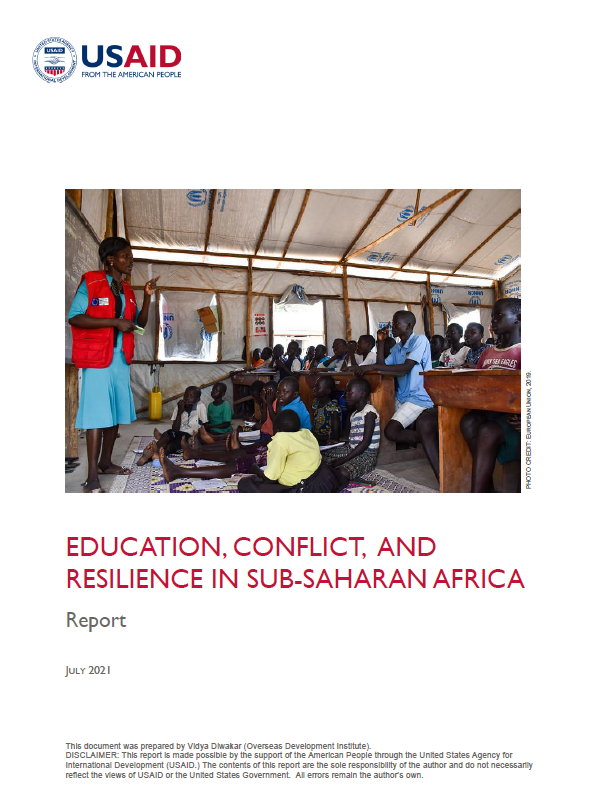
The Sustainable Development Goals call for action in many areas relevant for girls and boys, not least quality education, but challenges in achieving progress may be aggravated by factors including poverty and armed conflict. Conflict has negative impacts on education, which can operate through a variety of supply- and demand-side channels. It can destroy infrastructure, displace students and teachers, and modify the returns to schooling, all of which can limit school enrolment (e.g. Akresh and de Walque 2008; Dabalen and Paul 2014; Serneels and Verporten 2012; Poirier 2012; Bertoni et al. 2019). Even in countries where primary school enrolment rates may be increasing, conflict can widen disparities in education access and contribute to the intergenerational transmission of poverty.
In this context, strengthening resilience capacities that can enable children living in conflict-affected areas to continue to access education is critical. USAID’s 2018 Education Policy recognizes that in order to strengthen resilience, “education in partner countries must have the capacity to embed effective approaches to improving learning and education outcomes, to innovate, and to withstand shocks and stresses” (USAID 2018, p. 17). Conflict is generally not a “shock” but more a social process, reflecting something structural and with a long time-dimension (though a single conflict event and its impact may be experienced as a shock locally). The ability to access education in contexts of protracted crises is critical.
This report examines the links between conflict, education, resilience and poverty dynamics in sub-Saharan Africa in a set of USAID Resilience Focus Countries. It relies on panel data from Ethiopia, Malawi, Niger, Nigeria, Uganda, and the Democratic Republic of Congo (DRC) to investigate the relationship between conflict and education, focusing on girls and boys in households on different poverty trajectories (see Box 1). It then builds on Diwakar et al. (2021) to examine the types of resilience capacities that can promote school access for children in conflict-affected areas. In doing so, the paper attempts to contribute to the knowledge base on the pathways through which conflict affects education differently for girls and boys in households on different poverty trajectories, and how resilience capacities of households and institutions can be supported to contribute to increased enrolment in situations of conflict and violence.
Author: Vidya Diwakar

Educating poor and vulnerable children in conflict-affected areas: Policy Brief
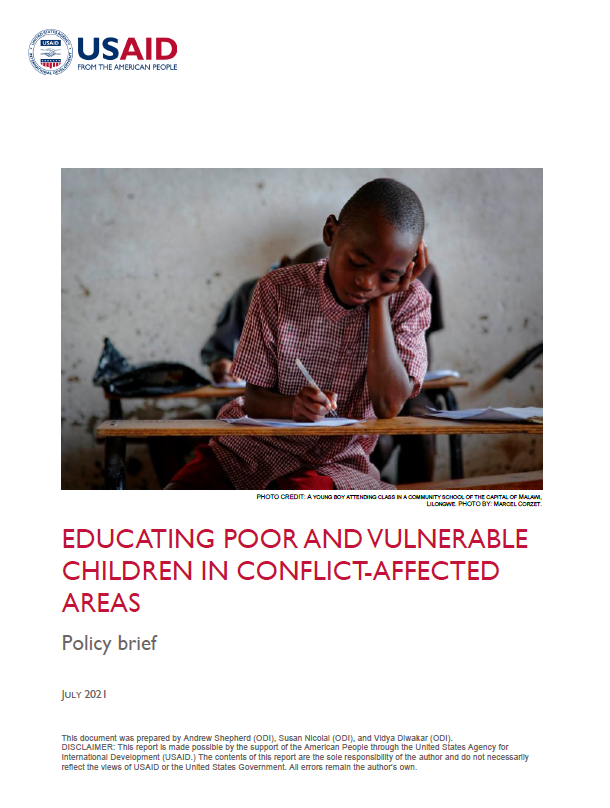
Education is recognized to be a ‘portable asset’ (Bird et al. 2010)—one with intrinsic as well as instrumental value and with the potential to contribute to sustained escapes from poverty (Diwakar et al. 2021). However, education access might be compromised in areas affected by armed conflict due to various supply- and demand-side factors. These range from limited state budgets, destruction of infrastructure, displacement of students and teachers, constrained household expenditures, and a general context of insecurity that may limit decisions to enroll. In this way, conflict “damages education from above [through national budgets] and below [through household budgets]” (UNESCO 2011).
Accordingly, a context-specific selection of demand-supporting as well as supply-enhancing measures for promoting formal education is needed in conflict-affected areas (CAAs). Supporting demand for education is critical in CAAs, as conflict can so easily reinforce other constraints on demand. Key demand-boosting measures more generally include: early childhood care and education; school feeding; enhancing quality throughout the system (especially in the early years of primary school); special attention to ensure the continued education of girls; and support for vulnerable children in their transitions between education levels and into the labor market, self-employment or further training. Though not specific to CAAs, a focus on these measures could help ease the financial constraints of households in CAAs, so that the motivation to support children through education remains strong for parents and wider social networks.
There are also supply-side fundamentals which need to be assured in CAAs: above all, that schools need to be safe and secure. Other supply-side needs in CAAs include: improving infrastructure and resources (including teaching materials and updated curricula) to maintain education systems amid widespread insecurity and the destruction (UNESCO 2011); teacher training for work in CAAs; and addressing distributional effects stemming from factors such as restrictions in population movements or the co-option of education by conflict parties (Justino 2016). This is often a big issue in CAA where schools, especially at secondary level, can be arenas of conflict for warring parties.
This brief recommends education policy and programming priorities stemming from recent research on education, conflict, and resilience in sub-Saharan Africa (see Box 1). Based on the research findings, it draws attention to how to meet challenges related to opportunity costs (by investigating how to support poor and vulnerable children into secondary education, and how to improve quality), and how to help link education with labor markets to strengthen households’ financial resilience in CAAs.
Authors: Andrew Shepherd (ODI), Susan Nicolai (ODI), and Vidya Diwakar (ODI).

Education, resilience and sustained poverty escapes: Synthesis Report of Sub Saharan Africa
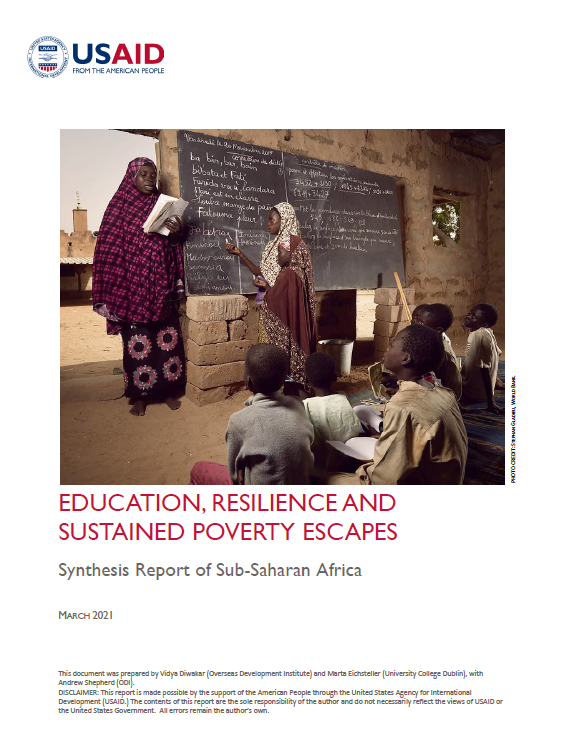
Resilience is defined as the “ability of people, households, communities, countries, and systems to mitigate, adapt to, and recover from shocks and stresses in a manner that reduces chronic vulnerability and facilitates inclusive growth” (USAID 2012, 5). While there have been important gains in poverty reduction internationally over the last two decades, there is a concurrent recognition that without nurturing resilience, these gains are fragile and may risk reversal in a multi-hazard context. Developing resilience is arguably a central component of ensuring sustained poverty reduction. A key way in which resilience can be strengthened is through education. In turn, resilience capacities can improve education outcomes. Combined together, sets of resilience capacities have the potential to contribute to sustained poverty reduction.
This paper analyzes this interrelationship between resilience, education, and sustained poverty reduction in sub-Saharan Africa. It synthesizes mixed-methods research by the Chronic Poverty Advisory Network (CPAN) to contribute to this knowledge base by focusing on data from Tanzania, Rwanda, Niger, Malawi, Ethiopia, Uganda, and rural Kenya, drawing out regional conclusions where possible, while also exploring country-level and intra-country differences. This study adopts a resilience framing to examine the potential for sustained development gains through poverty reduction, within a multi-hazard context. It focuses on the role of education as a resilience capacity, and other capacities improving education outcomes—both of which operate primarily at the adaptive and absorptive level (see Figure 1 and Table 1). It recognizes instances when education as a resilience capacity combines with certain resilience capacities improving education outcomes, which can have a transformative potential to drive escapes from poverty that are sustained over time.
Authors: Vidya Diwakar (Overseas Development Institute) and Marta Eichsteller (University College Dublin), with Andrew Shepherd (ODI).
