Publications
CPAN produces a wide range of publications on its main cross-cutting theme, Poverty Dynamics, Pro-Poorest Economic Growth, and Governance and Social Inclusion.
Browse CPAN publications using the search box below by entering the title, keyword or the name of the author. Alternatively, you could search by type of resource below.
This report highlights poverty reduction in Rwanda during the 2000s and reasons for the unanticipated slowdown in poverty reduction in the recent years.

This paper presents the results of the qualitative data collection undertaken in Rwanda in 2017 and 2019 as part of a Q-squared analysis of poverty dynamics. It seeks to build on earlier work by da Corta et al. (2018a and 2018b) and Simons (2018) to understand the reasons for the slowdown in poverty reduction in Rwanda from 2014.
The present report seeks to analyze development trends in Kenya and understand the ways in which various groups in the country continue to be left behind.
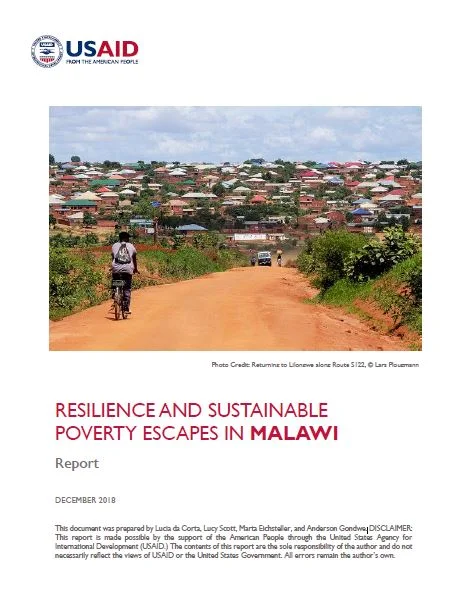
This research examined why some households in Malawi escape and remain out of poverty (sustainable poverty escape), while other households escape it only to fall back into poverty (transitory poverty escape) and still others descend into poverty for the first time (impoverishment).
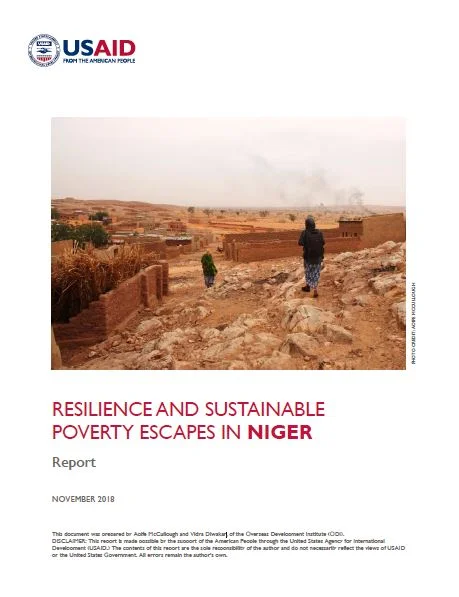
The focus of this report is on resilience and household poverty dynamics in Niger, specifically escapes and descents, with a focus on what explains why some households escape poverty and remain out of poverty, while other households escape poverty only to fall back into poverty.
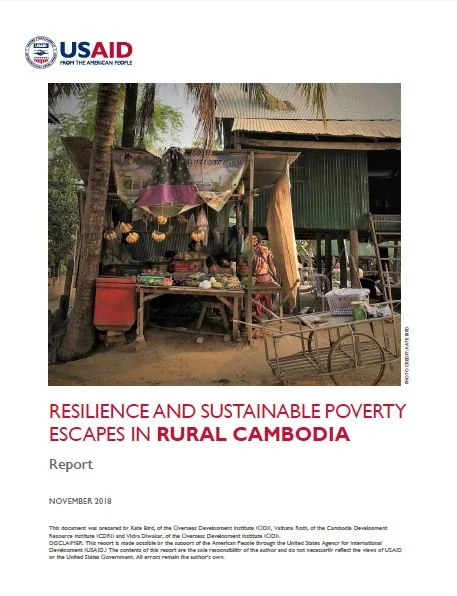
The focus of this report is on household poverty escapes in rural Cambodia and explains why some households escape poverty and remain out of poverty (sustainable poverty escape, or resilience), while other households escape poverty only to fall back into poverty (transitory poverty escape) and still other descend into poverty for the first time (impoverishment
The contribution of this paper is to establish knowledge of how and whether the observed economic growth in the past has been pro-poor and identify what are the enablers and constraints of poverty reduction in Rwanda.
The specific focus of this report is to analyse the movements of poverty and its linkages with economic growth for 2001-2010 period.
This study seeks to provide a detailed understanding of poverty dynamics in Malawi. This has not been done previously due to lack of nationally representative panel data.
This paper presents initial findings on the relationships between growth, growth incidence across the income distribution and those poverty dynamics in India, a set of relationships which has never previously been investigated.
This report focuses on household poverty escapes in Tanzania and explains why some households escape poverty and remain out of poverty (sustainable poverty escape, or resilience), while other households escape poverty only to fall back into poverty (transitory poverty escape) or descend into poverty for the first time (impoverishment).
This report investigates the drivers of sustained and transitory escapes from poverty in the Philippines
This study aimed to explore the factors that sustain escapes from poverty in Tanzania, including pathways out of poverty, the policies/programmes/strategies and institutions that sustain poverty escapes and create resilience, and the effect of political settlements in supporting and sustaining poverty escapes.
This study aimed to interrogate the common factors behind sustained escapes from poverty, as well as policy measures that supported such escapes in Ethiopia.
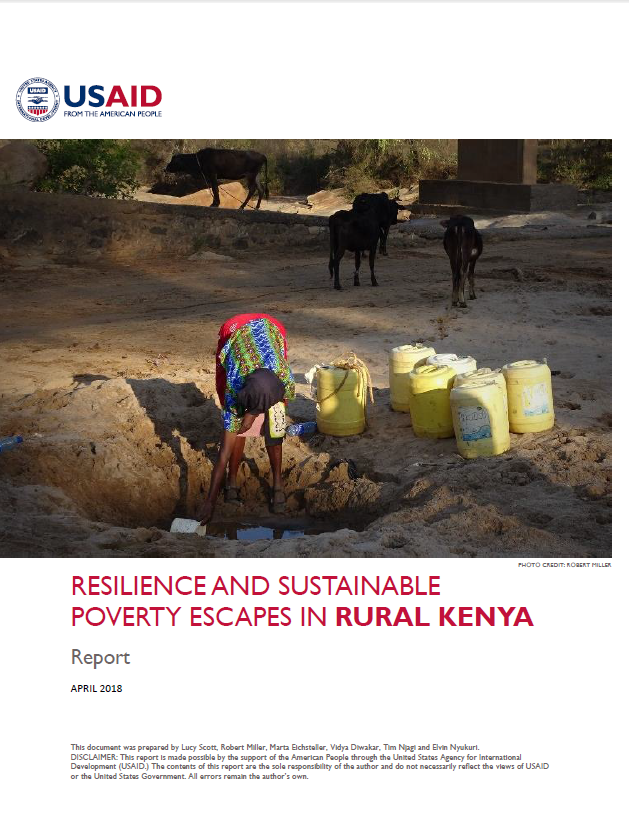
The report investigates the resources (land, livestock, and assets), attributes (household composition and education level), and activities (including jobs and engagement in non-farm activities) of households that enable them to escape poverty sustainably and minimise the likelihood of returning to living in poverty again
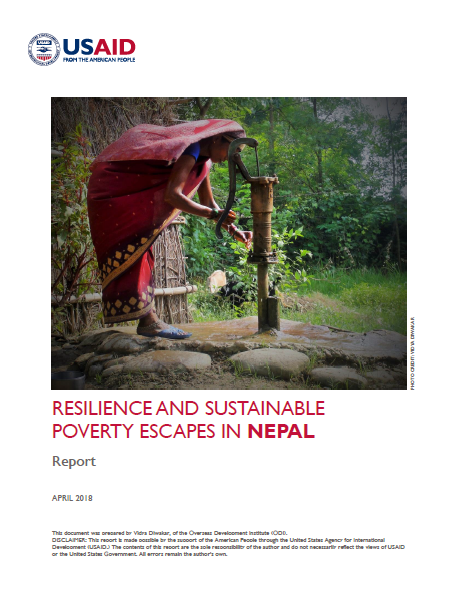
The focus of this report is on household poverty escapes and what explains why some households escape poverty and remain out of poverty, while other households escape poverty only to fall back into poverty and still other descend into poverty for the first time.
If we want to continue to reduce poverty in Rwanda, we have to look at the determinants of poverty in the country and generate new ways to tackle it, as well as continuing along existing paths, where appropriate. Identifying the determinants of poverty will help us to fight poverty in a sustainable way. This paper investigates how.
This study explores the nature of poverty dynamics in Tanzania using three waves of the Tanzanian National Panel Survey, spanning 2008 and 2013, and estimates the correlates for such dynamics
This study look at poverty dynamics in Tanzania under a qualitative approach.
This study aims to increase the understanding of the factors associated with impoverishment and sustained escapes from poverty and of how policies and programmes can support these escapes in Ethiopia.
This report presents the major findings of a qualitative study carried out in four selected areas of Ethiopia. The purpose of the study was to understand the factors in and processes related to sustained escape from poverty. It also aimed to establish the major political, economic and social contextual factors and changes that shape the pathways of different social groups.
The overall aim of this project is to increase our understanding of the factors associated with sustained escapes from poverty, of how policies and programmes can support these escapes and the political and institutional pre-conditions under which these policies can successfully be initiated.
This report is a synthesis of the research developed in the framework of the project 'Disability, poverty and poverty dynamics: a preliminary analysis of panel data, policies and politics in Bangladesh' and aims to summarises its main finding and policy implications.


The Chronic Poverty Report 2023: Pandemic Poverty sets out to investigate the highly negative effects of the Covid-19 restrictions, and most importantly, the success or otherwise of the measures pursued to mitigate those effects on people in and near poverty.
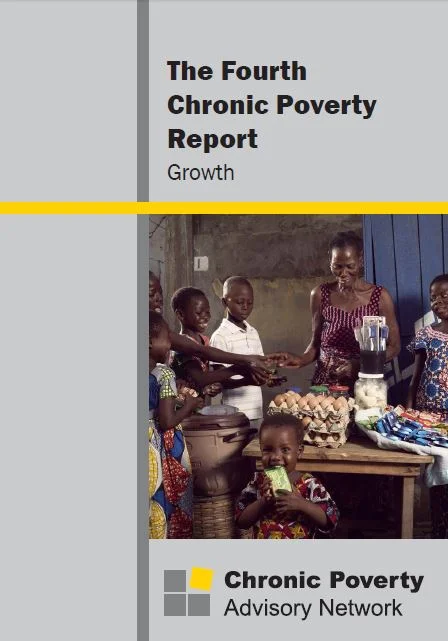
This report introduces the concept of ‘Growth from below’ and analyses policies and programmatic approaches that directly help people out of poverty through the informal economy, women’s economic empowerment and the inclusion of most marginalised groups, agriculture, the rural non-farm economy and migration.

This report demonstrates that escaping from poverty is not a one-way street – many families slide back below the poverty line because of factors such as ill-health, job loss and natural disasters.
Authors: Andrew Shepherd, Lucy Scott, Chiara Mariotti, Flora Kessy, Raghav Gaiha, Lucia da Corta, Katharina Hanifnia, Nidhi Kaicker, Amanda Lenhardt, Charles Lwanga-Ntale, Binayak Sen,
Bandita Sijapati, Tim Strawson, Ganesh Thapa, Helen Underhill, Leni Wild.
The report has looked at the large numbers of programmes and schemes in various forms that over the years aimed at poverty alleviation in India, some targeting specific groups, to try and identify why they have not succeeded to the desired extent. Design flaws, weak implementation, inadequate provision of funds, and the inability of the poor to access scheme benefits, are amongst many factors identified and analyzed.

The overall message of the second Uganda Chronic Poverty Report is that chronically poor people are hardly on the policy radar. It emphasises the need for more political commitment in Uganda to address the issue of chronic poverty.
Authors: Development Research and Training (DRT) and the Chronic Poverty Research Centre (CPRC).
This report on Chronic Poverty in Uganda is intended to inform policy makers and implementers (both within government and civil society), so that the interests of the very poorest in our country are reflected in national priorities.
Bangladesh has come out of the "shadow of famine", the problem of starvation still persists. Accurate figures are not available for urban areas, but in effect between 25 to 30 million of the country's citizens are chronically poor. Here we review the present status and situation of the poorest, analyse the main factors that keep them in poverty and identify the types of policy that can help them escape deprivation and gain their full rights as citizens of an increasingly prosperous and high-stepping country.

The report is about the estimated 320 to 443 million people who live trapped in chronic poverty - people who will remain poor for much or all of their lives and whose children are likely to inherit their poverty. The chronically poor experience multiple deprivations, including hunger, undernutrition, illiteracy, lack of access to safe drinking water and basic health services, social discrimination, physical insecurity and political exclusion. Many will die prematurely of easily preventable deaths.
The first Chronic Poverty Report examines what chronic poverty is and why it matters, who the chronically are, where they live, what causes poverty to be persistent and what should be done about it. A section of regional perspectives looks at the experience of chronic poverty in sub-Saharan Africa, South Asia, Latin America and the Caribbean, transitional countries and China. A statistical appendix brings together data on global trends on chronic poverty.
The guide highlights the potential trade-offs that policy-makers, programme designers and implementers face in using social protection with the specific objective of preventing impoverishment.
Authors: Lucy Scott and Vidya Diwakar
This policy guide looks at evidence from social protection programmes with innovative designs that combine different interventions, either following a graduation approach or by building integrated social protection systems.
Authors: Chiara Mariotti, Martina Ulrichs and Luke Harman

The objective of this policy guide is to provide policymakers and programme designers with an up-to-date view of what needs to be done to include the poorest people in financial services, and by doing so make a dent in their poverty. It selects savings and insurance as two aspects of financial services that are most likely to build poor people’s resilience in the face of the multiple risks they face – a necessary precursor to any investments they might make to get out of poverty.

This policy guide aims at identifying those interventions that best promote entrepreneurship among the poor in a way that puts them on trajectories out of poverty. For some, these interventions can contribute to sustained poverty escapes; for others, they mean faster upward mobility to the poverty line.
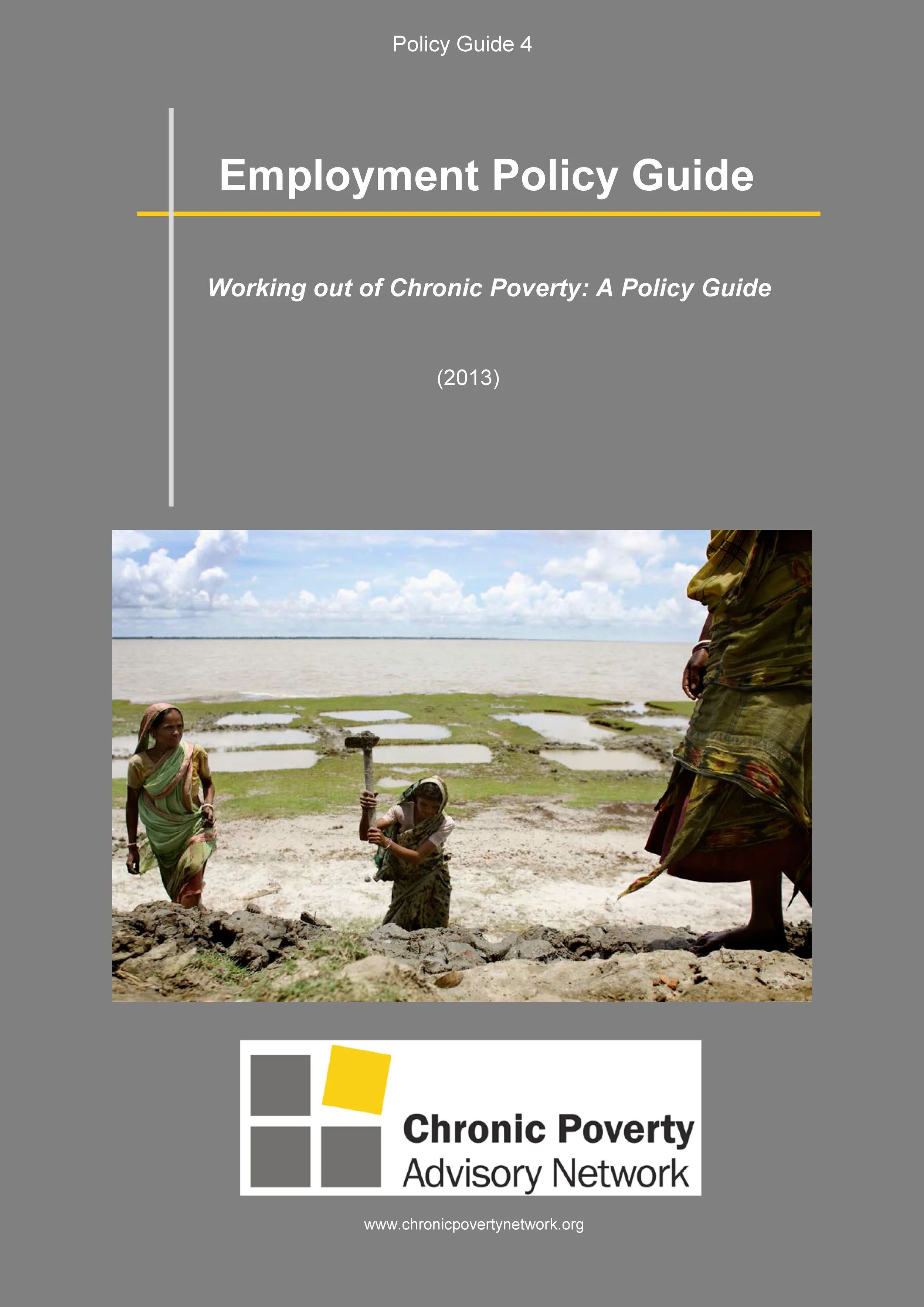
This policy guide examines policies and programmes to improve the quantity and quality of work for chronically poor people engaged in informal wage employment so that their hard work can contribute to poverty escapes.
Authors: Dominik Bulla, Lucy Scott and Andrew Shepherd, Martha Chen, Pedro Martins, Davuluri Venkateswarlu and Jill Wells.
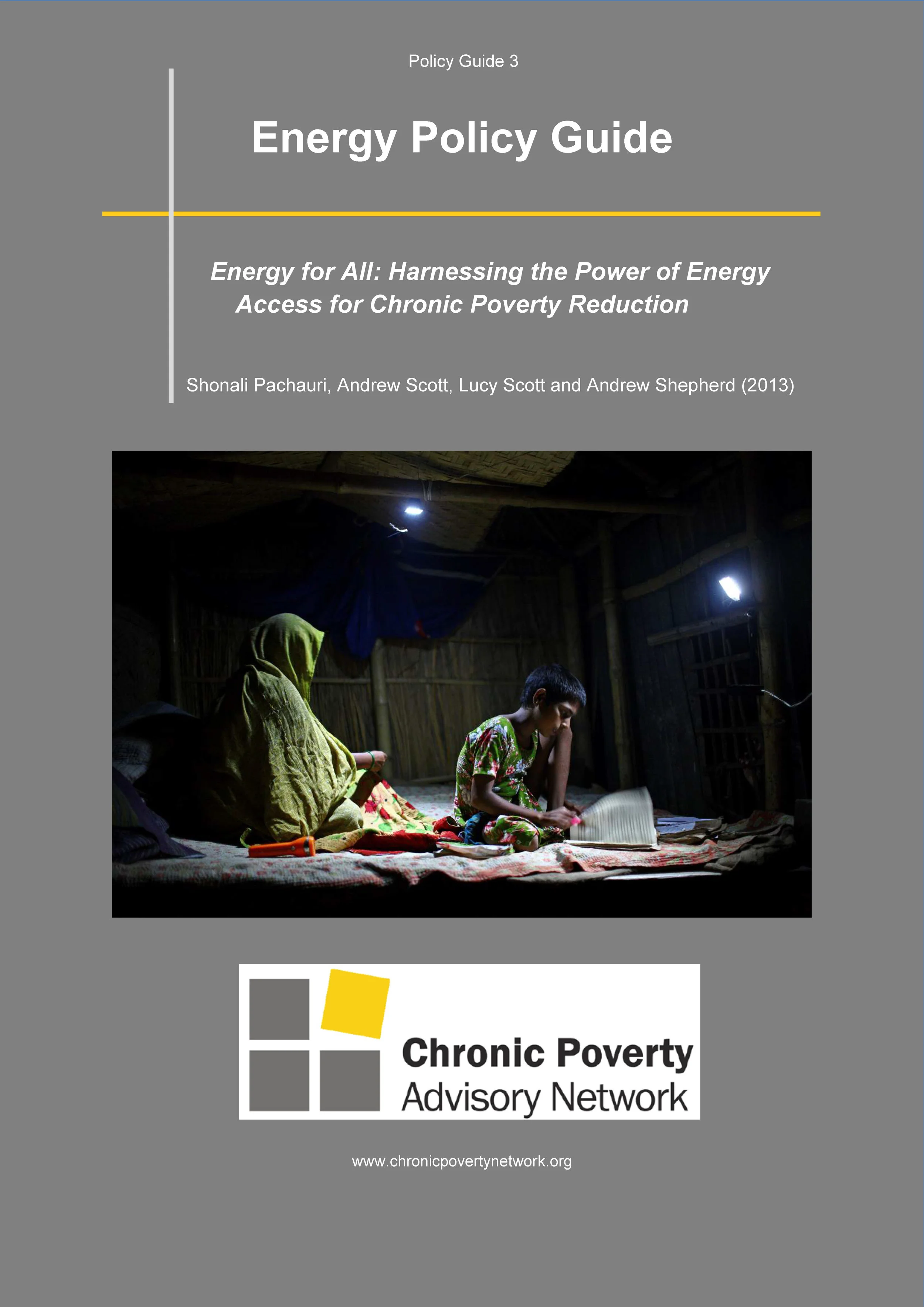
This policy guide explores how access to energy can assist with policies for the chronically poor.
Authors: Shonali Pachauri, Andrew Scott, Lucy Scott and Andrew Shepherd.

This Policy Guide look at the points at which education and chronic poverty policies overlap and at where, how and why education policies have successfully contributed to poverty reduction.
Authors: Naomi Hossain, Lucy Scott and Andrew Shepherd

The guide identifies key areas and new emphases for agricultural policy and programme development
to eradicate poverty and hunger and presents new research results on agriculture and poverty
dynamics in Africa.
Authors: Amanda Lenhardt, Amita Shah, Andrew Shepherd, Bara Gueye, Lucy Scott and Miranda Morgan
Thispaper provides the latest analysis of development policies and programmes that work best for the poorest people. It has a particular focus on the poorest women and girls and it also focuses on the work carried out by a number of leading donors, assessing the extent to which they attempt to reach the poorest, and among them the poorest women and girls.
This paper addresses that knowledge gap by applying new analytical techniques to existing data, helping to assess the impact of different types of pro-poor interventions in Fragile and Conflict Affected States (FCAS)
Author: Andrew Shepherd, Vidya Diwakar, Georgina Sturge

This paper analyses 12 Swedish bilateral country programmes of development cooperation and the extent to which they are focusing on interventions assessed to be effective in fighting poverty, according to the Chronic Poverty Report (CPR) 2014-2015 and other research findings.

This paper uses panel data analysis to assess whether people that have escaped poverty have remained above the poverty line or have fallen back below it. It suggests a range of policies that can ensure that poverty escapes are more resilient.
Authors: Lucy Scott, Katharina Hanifnia, Andrew Shepherd, Milu Muyanga and Elsa Valli.

This challenge paper draws on available evidence to challenge existing thinking on the way forward for a revised agenda to eradicate extreme poverty.
Authors: Amanda Lenhardt and Andrew Shepherd



This study explores social inclusion of poor women and children as both process and outcome in Niger and Malawi.

To date, there is little knowledge about what differentiates a sustained escape from a temporary escape, or these from chronic poverty. The principal objective of this research is to develop an understanding of why some households managed to sustain their escapes out of extreme poverty while others fell back into poverty.