
The focus of this report is on household poverty escapes in rural Cambodia and explains why some households escape poverty and remain out of poverty (sustainable poverty escape, or resilience), while other households escape poverty only to fall back into poverty (transitory poverty escape) and still other descend into poverty for the first time (impoverishment).
Analysis of four rounds of the panel Agriculture, Rural Development and Poverty Reduction Survey in Cambodia spanning 2008-2017 for this case study reveals that just under one fifth of households escaped poverty sustainably, while almost the same share (20%) escaped only to fall back in, or became impoverished for the first time, over the study period. There is considerable dynamism in rural household’s poverty status with almost 4 in 5 households living in poverty during at least one of the 2008-17 survey years.
This report combines analysis from four rounds of the panel survey with qualitative research approaches, in particular, key informant interviews, life histories, and participatory wealth ranking in 6 study sites across Cambodia major agro-ecological zones to further investigate the drivers of changes in poverty status. It brings together:
New quantitative analysis of four rounds spanning 2008-2017 of the panel Agriculture, Rural Development and Poverty Reduction Survey in Cambodia.
Insights from 21 key informant interviews with development stakeholders in Phnom Penh, and interviews with knowledgeable community leaders in six village communities: Andong Trach and Khsach Chi Ros (both in Tonle Sap Plain), Ba Baong (Mekong Plain), Dang Kdar and Kanchor (both in Upland Plateau), and Kompong Tnoat (Coastal). These six sites were chosen as analysis of the Agriculture, Rural Development and Poverty Reduction Survey in Cambodia revealed they had high shares of households that were transitory escapers and sustained escapers, and as they are in USAID areas of interest.
Information from 36 focus group discussions (FGDs), separately for men and women and differentiated by poverty trajectory, was used to create historical participatory wealth ranking in the six study villages. These community FGDs provided a snapshot through which to better understand the meso-level drivers of mobility in wellbeing.
Life history interviews with 60 men and women in the six sites, identified from the panel data analysis and confirmed during the participatory wealth ranking as being on the different poverty trajectories. Note: all names of life history respondents have been anonymized in this report.
Wider literature on poverty reduction and poverty dynamics in Cambodia.
The results of the analysis show that Cambodia has experienced rapid and sustained growth. This has enabled poverty reduction, with strong growth in unskilled and semi-skilled employment. Investment in improved rural infrastructure (rural roads, electricity, water and sanitation and buildings for both education and medical facilities) has improved access to markets and to both education and health. A number of challenges remain still to address. More information can be find the related Policy Implication Brief.
Authors: Kate Bird and Vidya Diwakar
This report introduces the concept of ‘Growth from below’ and analyses policies and programmatic approaches that directly help people out of poverty through the informal economy, women’s economic empowerment and the inclusion of most marginalised groups, agriculture, the rural non-farm economy and migration.

The brief presents findings around health shocks and health as a resilience capacity from a series of 11 country studies on drivers of poverty dynamics in both Africa and Asia.
This brief draws on results of mixed methods research in Malawi, to offer policy and programming implications for sustained poverty reduction.
This research examined why some households in Malawi escape and remain out of poverty (sustainable poverty escape), while other households escape it only to fall back into poverty (transitory poverty escape) and still others descend into poverty for the first time (impoverishment).
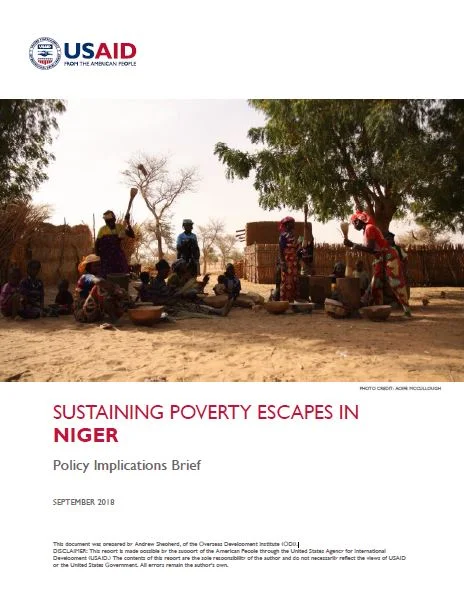
This policy brief highlights the policy recommendations to contribute to achieve sustained escapes out of poverty in Niger
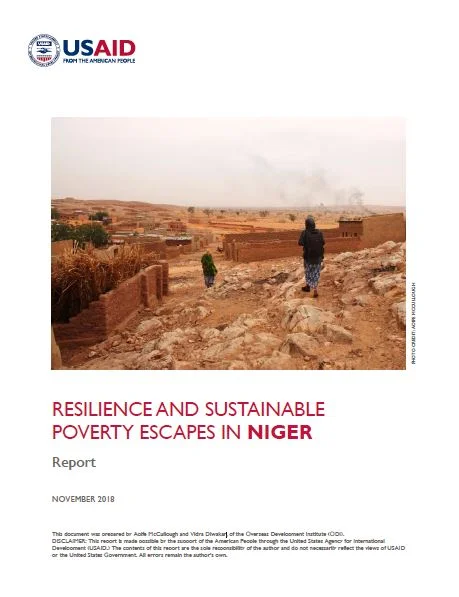
The focus of this report is on resilience and household poverty dynamics in Niger, specifically escapes and descents, with a focus on what explains why some households escape poverty and remain out of poverty, while other households escape poverty only to fall back into poverty.
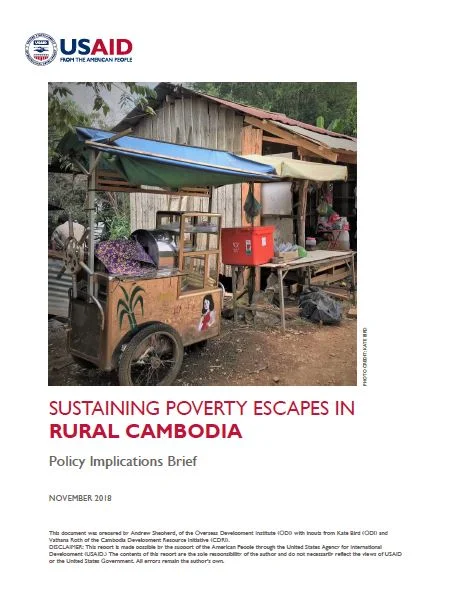
The focus of this brief is on what these findings may mean for interventions and approaches in Cambodia that aim to enable poor households to escape from poverty and to maintain that escape over time
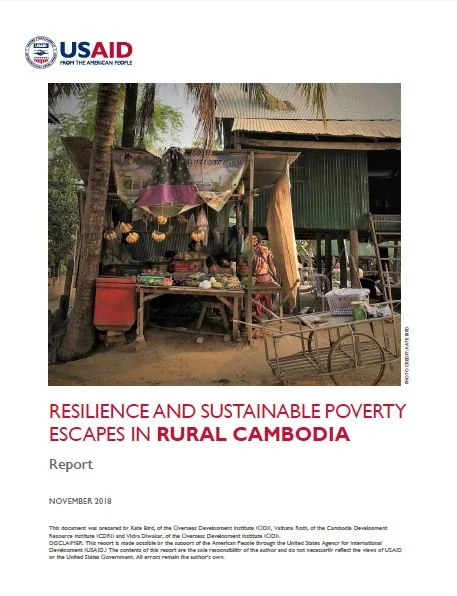
The focus of this report is on household poverty escapes in rural Cambodia and explains why some households escape poverty and remain out of poverty (sustainable poverty escape, or resilience), while other households escape poverty only to fall back into poverty (transitory poverty escape) and still other descend into poverty for the first time (impoverishment
The contribution of this paper is to establish knowledge of how and whether the observed economic growth in the past has been pro-poor and identify what are the enablers and constraints of poverty reduction in Rwanda.
The specific focus of this report is to analyse the movements of poverty and its linkages with economic growth for 2001-2010 period.
This study seeks to provide a detailed understanding of poverty dynamics in Malawi. This has not been done previously due to lack of nationally representative panel data.
This paper presents initial findings on the relationships between growth, growth incidence across the income distribution and those poverty dynamics in India, a set of relationships which has never previously been investigated.
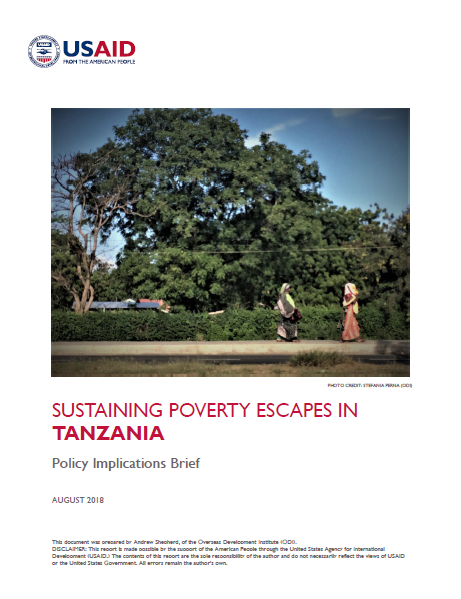
This brief draws on results of mixed methods research in Tanzania, to offer policy and programming implications for sustained poverty reduction.
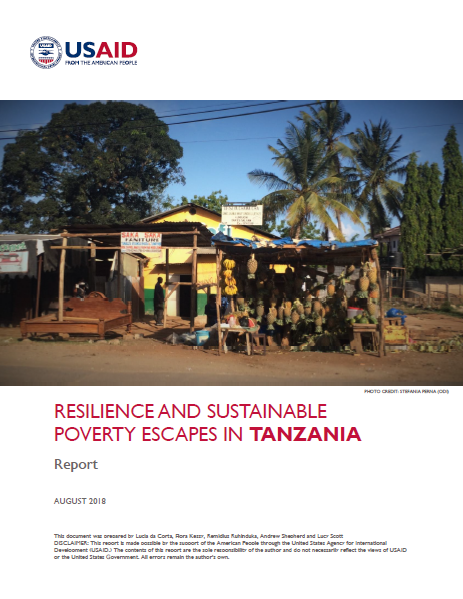
This report focuses on household poverty escapes in Tanzania and explains why some households escape poverty and remain out of poverty (sustainable poverty escape, or resilience), while other households escape poverty only to fall back into poverty (transitory poverty escape) or descend into poverty for the first time (impoverishment).
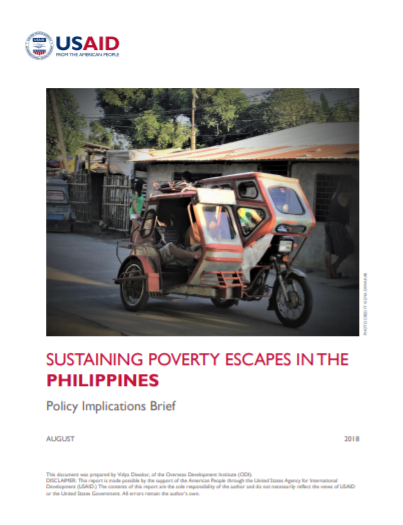
This policy brief draws on results of mixed methods research in the Philippines, to offer policy and programming implications for sustained poverty reduction.
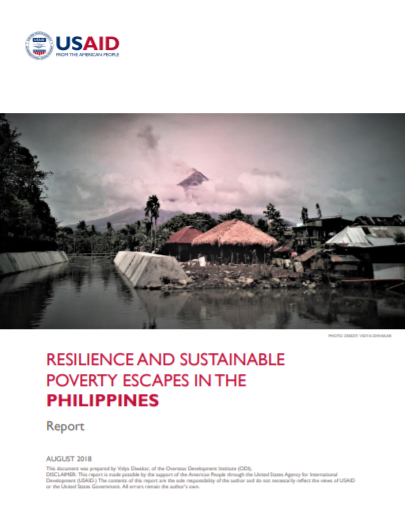
This report investigates the drivers of sustained and transitory escapes from poverty in the Philippines

The focus of this brief is on what those findings may mean for interventions and approaches in Kenya that aim to enable poor households to escape poverty and remain out of it.
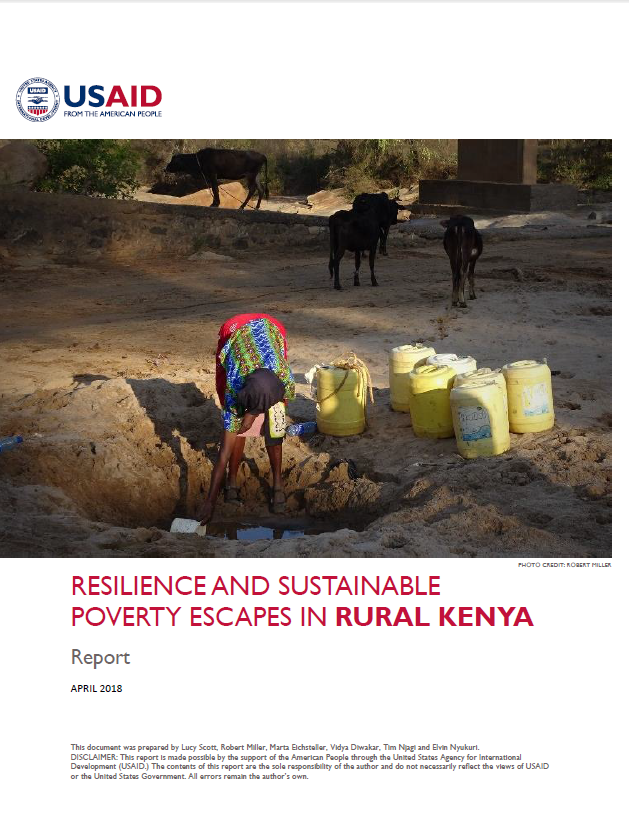
The report investigates the resources (land, livestock, and assets), attributes (household composition and education level), and activities (including jobs and engagement in non-farm activities) of households that enable them to escape poverty sustainably and minimise the likelihood of returning to living in poverty again
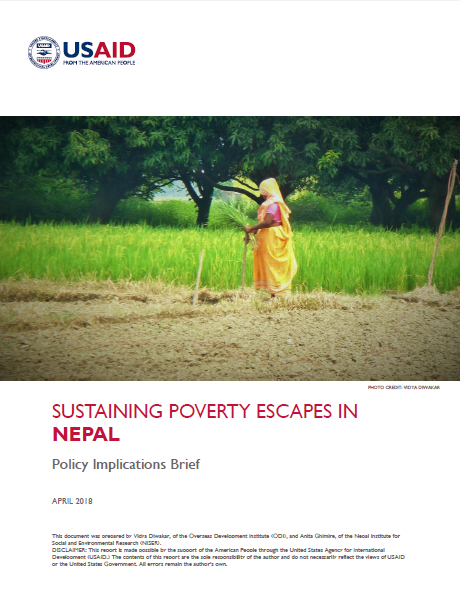
This brief draws on results of mixed methods research in Nepal to offer policy and programming implications for sustained poverty reduction and it advocates a portfolio response to poverty reduction that incorporates a sound understanding of poverty dynamics
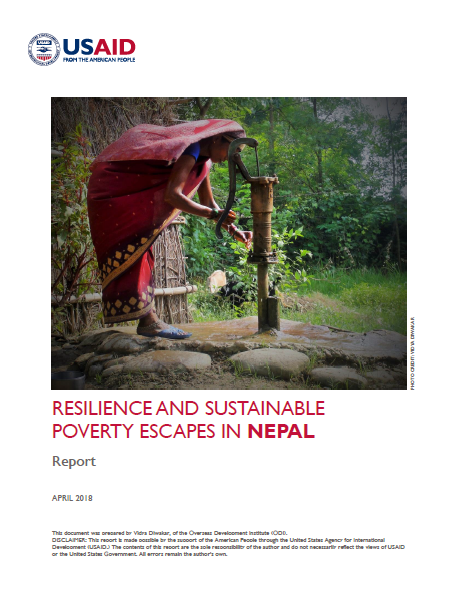
The focus of this report is on household poverty escapes and what explains why some households escape poverty and remain out of poverty, while other households escape poverty only to fall back into poverty and still other descend into poverty for the first time.
Recent research by ODI CPAN, commissioned by the USAID Center for Resilience, investigated the resilience of households above the poverty line in Uganda and the Philippines.