
The political, economic, social and environmental context for poverty reduction is challenging in Niger. In the short term, ending war, and getting public expenditure back into supporting development efforts are the priorities. The policy implications drawn in this brief are focused on the medium term, although in the short term programming by development partners and NGOs may be able to help prepare the ground for this medium term. Aid to Niger has increased, but given its poverty levels, it may still be under-aided. Given the war in the east, keeping basic services going may be a significant agenda for development partners in the short term.
Indeed, life is extremely risky and uncertain for poor and vulnerable people in Niger. The government and its development partners could attempt to reduce exposure to risk and strengthen poor people’s resilience.
Drawing from the accompanying national report in Niger, this brief highlights the policy recommendations to contribute to achieve sustained escapes out of poverty in Niger.
Author: Andrew Shepherd
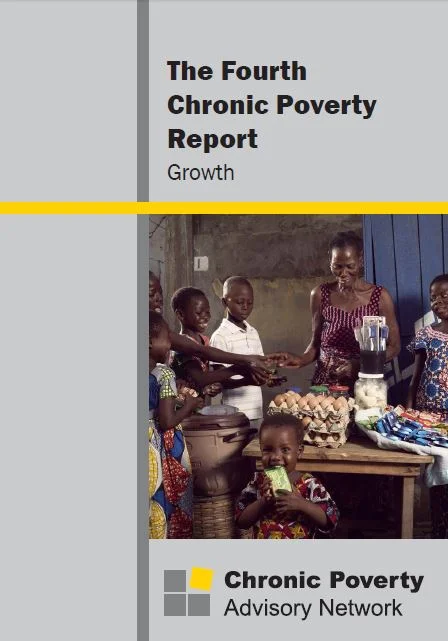
This report introduces the concept of ‘Growth from below’ and analyses policies and programmatic approaches that directly help people out of poverty through the informal economy, women’s economic empowerment and the inclusion of most marginalised groups, agriculture, the rural non-farm economy and migration.

The brief presents findings around health shocks and health as a resilience capacity from a series of 11 country studies on drivers of poverty dynamics in both Africa and Asia.
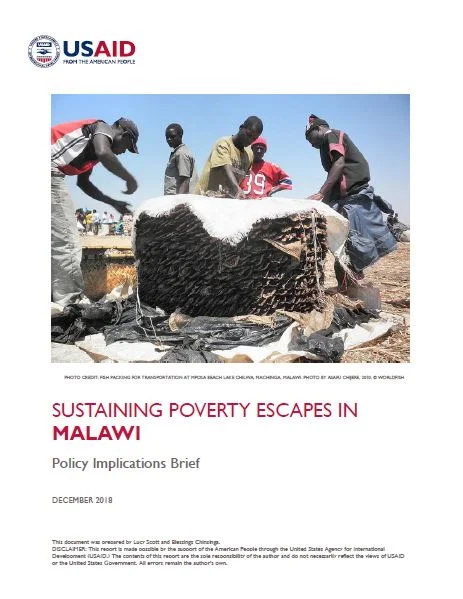
This brief draws on results of mixed methods research in Malawi, to offer policy and programming implications for sustained poverty reduction.
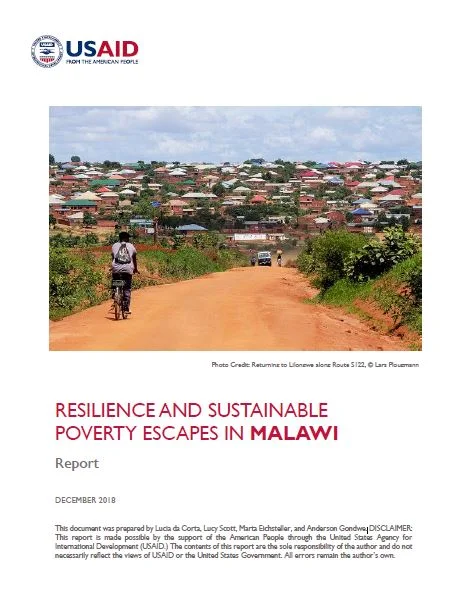
This research examined why some households in Malawi escape and remain out of poverty (sustainable poverty escape), while other households escape it only to fall back into poverty (transitory poverty escape) and still others descend into poverty for the first time (impoverishment).
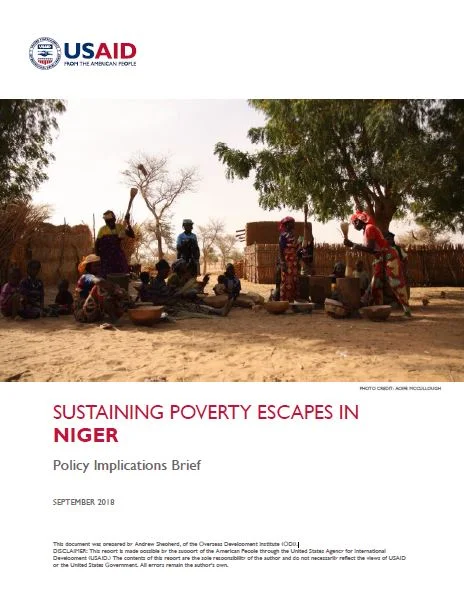
This policy brief highlights the policy recommendations to contribute to achieve sustained escapes out of poverty in Niger
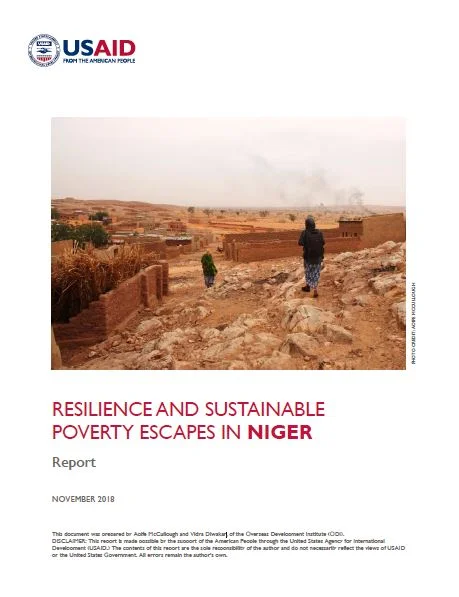
The focus of this report is on resilience and household poverty dynamics in Niger, specifically escapes and descents, with a focus on what explains why some households escape poverty and remain out of poverty, while other households escape poverty only to fall back into poverty.
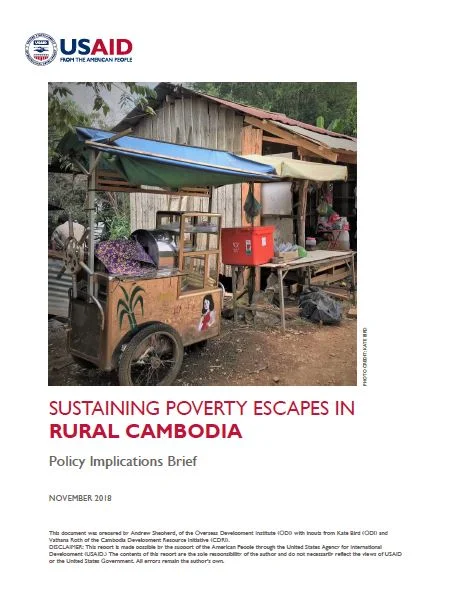
The focus of this brief is on what these findings may mean for interventions and approaches in Cambodia that aim to enable poor households to escape from poverty and to maintain that escape over time
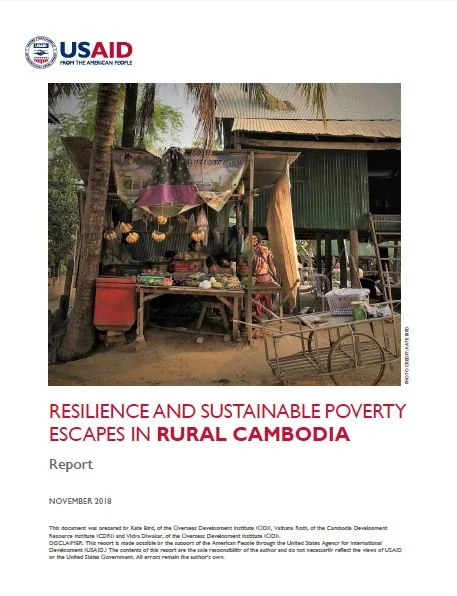
The focus of this report is on household poverty escapes in rural Cambodia and explains why some households escape poverty and remain out of poverty (sustainable poverty escape, or resilience), while other households escape poverty only to fall back into poverty (transitory poverty escape) and still other descend into poverty for the first time (impoverishment
The contribution of this paper is to establish knowledge of how and whether the observed economic growth in the past has been pro-poor and identify what are the enablers and constraints of poverty reduction in Rwanda.
The specific focus of this report is to analyse the movements of poverty and its linkages with economic growth for 2001-2010 period.
This study seeks to provide a detailed understanding of poverty dynamics in Malawi. This has not been done previously due to lack of nationally representative panel data.
This paper presents initial findings on the relationships between growth, growth incidence across the income distribution and those poverty dynamics in India, a set of relationships which has never previously been investigated.
This brief draws on results of mixed methods research in Tanzania, to offer policy and programming implications for sustained poverty reduction.
This report focuses on household poverty escapes in Tanzania and explains why some households escape poverty and remain out of poverty (sustainable poverty escape, or resilience), while other households escape poverty only to fall back into poverty (transitory poverty escape) or descend into poverty for the first time (impoverishment).
This policy brief draws on results of mixed methods research in the Philippines, to offer policy and programming implications for sustained poverty reduction.
This report investigates the drivers of sustained and transitory escapes from poverty in the Philippines

The focus of this brief is on what those findings may mean for interventions and approaches in Kenya that aim to enable poor households to escape poverty and remain out of it.
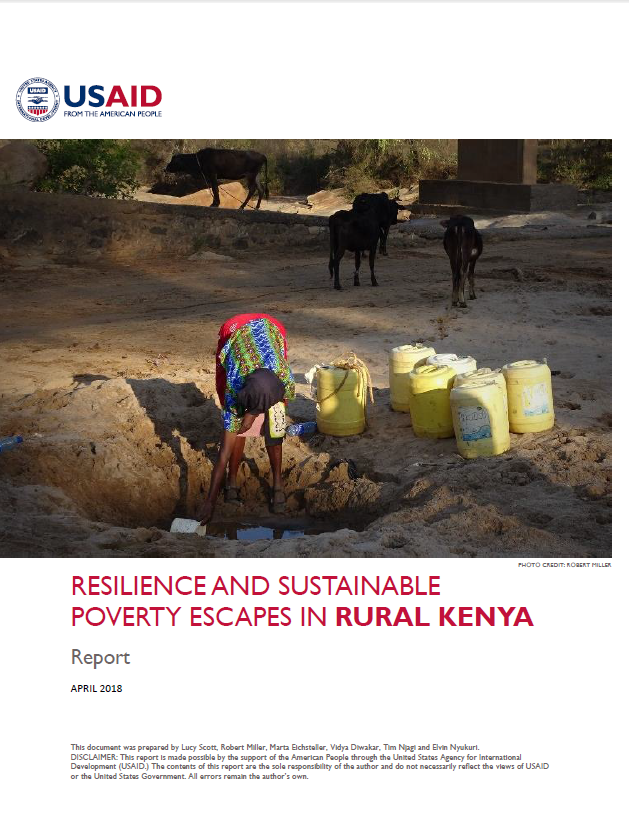
The report investigates the resources (land, livestock, and assets), attributes (household composition and education level), and activities (including jobs and engagement in non-farm activities) of households that enable them to escape poverty sustainably and minimise the likelihood of returning to living in poverty again
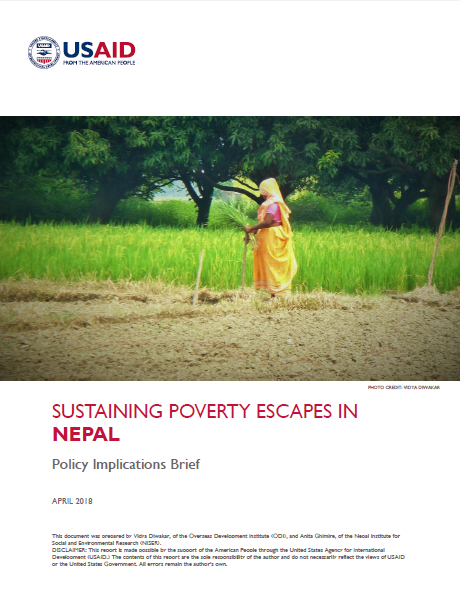
This brief draws on results of mixed methods research in Nepal to offer policy and programming implications for sustained poverty reduction and it advocates a portfolio response to poverty reduction that incorporates a sound understanding of poverty dynamics
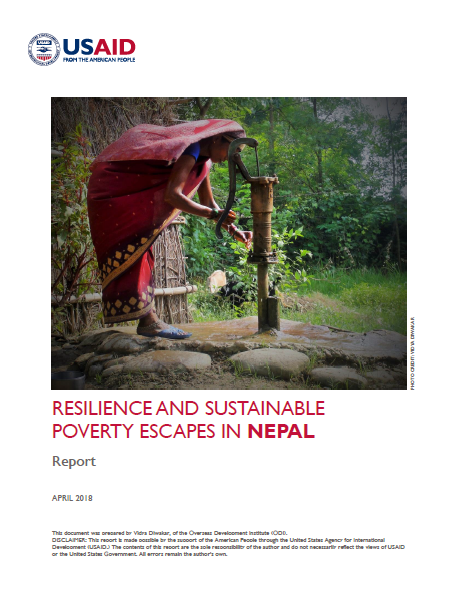
The focus of this report is on household poverty escapes and what explains why some households escape poverty and remain out of poverty, while other households escape poverty only to fall back into poverty and still other descend into poverty for the first time.
Recent research by ODI CPAN, commissioned by the USAID Center for Resilience, investigated the resilience of households above the poverty line in Uganda and the Philippines.