

Discussions about poverty and how to reduce or eradicate it usually focus on measuring and monitoring it, gauging how it is impacted by various technical interventions, and refining existing interventions or devising new ones in the hope they will help the poor to escape on a sustained and sustainable basis. In Ethiopia, Tanzania and Rwanda, much evidence has been collected on the steps that governments in the three countries and even poor people themselves have taken to combat poverty or leave it behind.
There are notable results from measures taken by governments and those the poor themselves have taken. Nonetheless, among those who have graduated, some, (relatively few,) have joined the ranks of the non-poor on a more or less permanent basis. There are also those who exit poverty but remain vulnerable to reversal by shocks such as prolonged drought, illness, and death of a spouse. And then there are those, the chronic poor who, despite their governments’ best efforts, remain mired in poverty, unable to make the progress necessary to join the ranks of the non-poor, even on temporary basis, because of structural factors.
An important aspect of combatting poverty that is not discussed as often as the technical interventions and their impacts is the institutional and political context in which policies designed to help lift the poor out of poverty are conceived and formulated, and anti-poverty measures are undertaken. In addition to the focus on the technical aspects of poverty reduction, this three-country study set out to investigate the political and institutional conditions under which policies and programmes related to the pursuit of sustained escapes from poverty were initiated and implemented.
This paper examines the politics of poverty reduction in Ethiopia, Tanzania and Rwanda using the political settlements framework. It discusses the extent to which the political settlement prevailing in any country influences the consistency and quality of policy making and the success or failure of anti-poverty policies and initiatives. It argues that a political settlement can be important in terms of the intra-elite consensus and cohesion and political stability it may engender, both of which allow for the necessary experimentation or learning by doing approach that has characterised successful processes of transformation elsewhere.
Author: Frederick Golooba-Mutebi

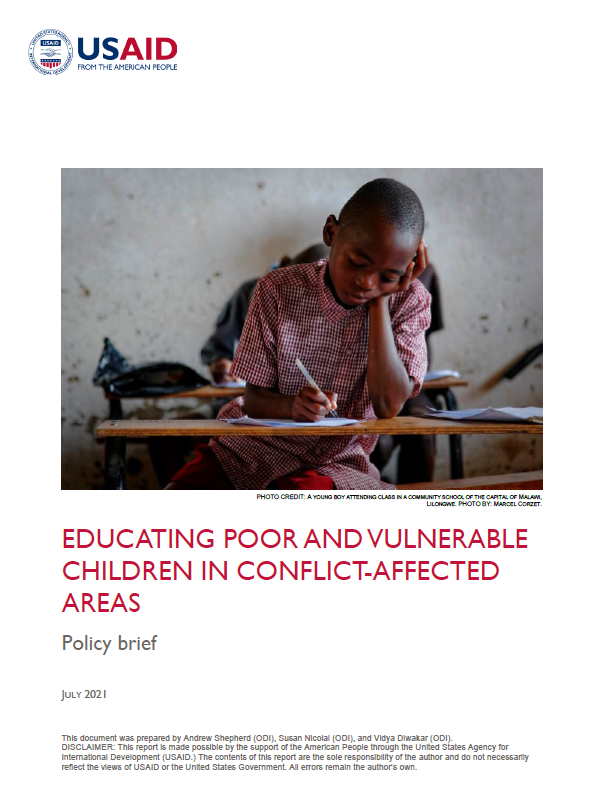
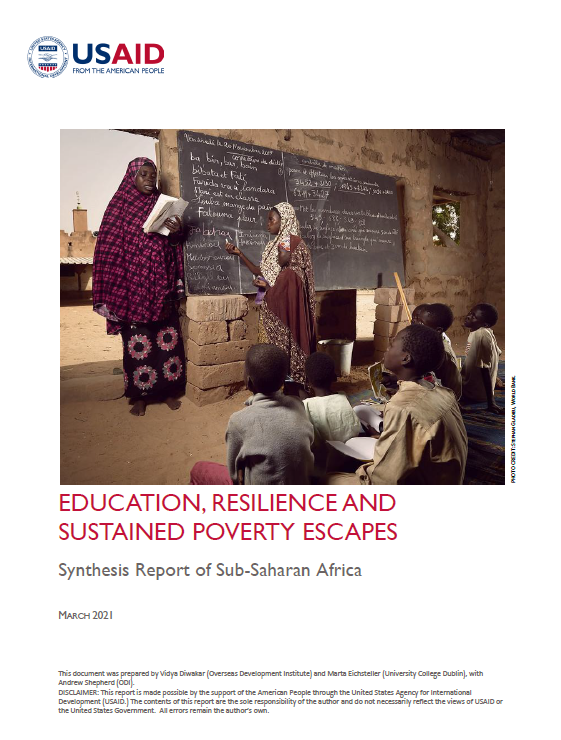
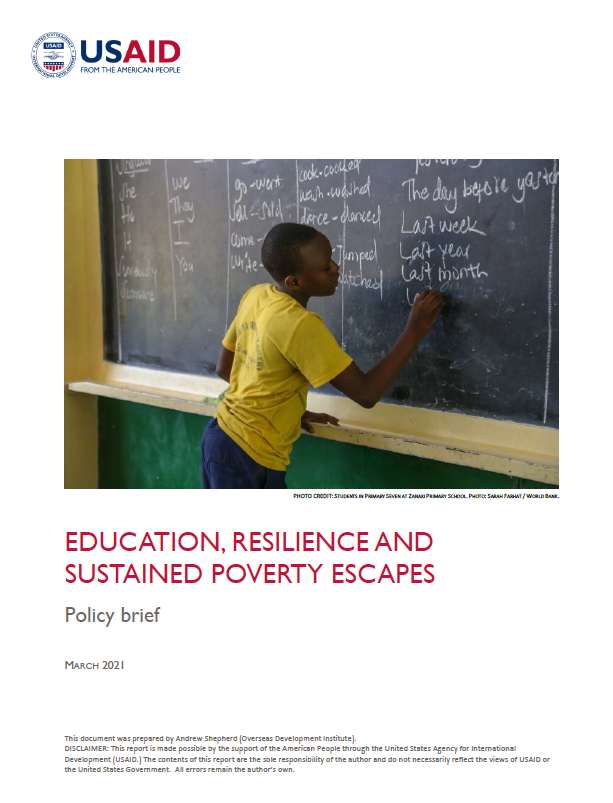
This paper is one of the outputs of the Project ‘Understanding and supporting sustained pathways out of extreme poverty and deprivation.’ Project related outputs can be found below.
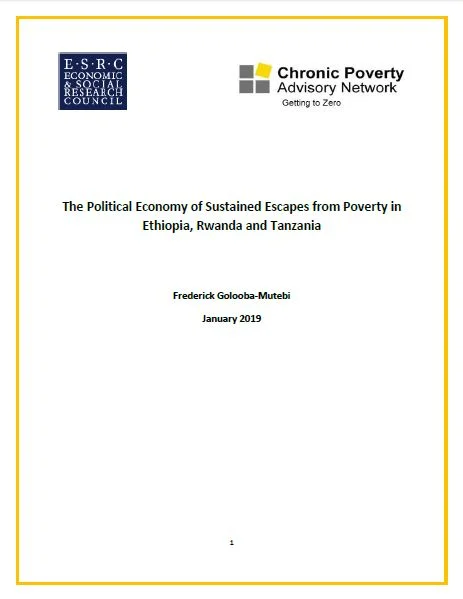
This paper examines the politics of poverty reduction in Ethiopia, Tanzania and Rwanda using the political settlements framework. It discusses the extent to which the political settlement prevailing in any country influences the consistency and quality of policy making and the success or failure of anti-poverty policies and initiatives
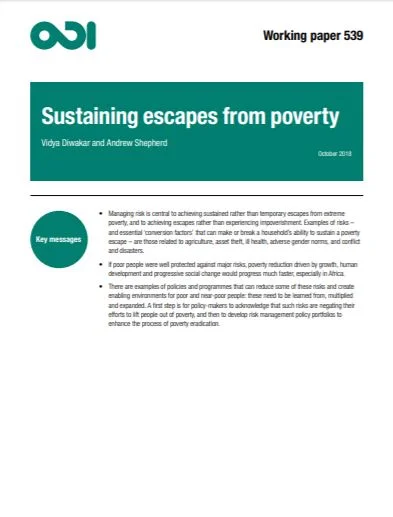
To date, there is little knowledge about what differentiates a sustained escape from a temporary escape, or these from chronic poverty. The principal objective of this research is to develop an understanding of why some households managed to sustain their escapes out of extreme poverty while others fell back into poverty.
This study aimed to explore the factors that sustain escapes from poverty in Tanzania, including pathways out of poverty, the policies/programmes/strategies and institutions that sustain poverty escapes and create resilience, and the effect of political settlements in supporting and sustaining poverty escapes.
This study aimed to interrogate the common factors behind sustained escapes from poverty, as well as policy measures that supported such escapes in Ethiopia.
If we want to continue to reduce poverty in Rwanda, we have to look at the determinants of poverty in the country and generate new ways to tackle it, as well as continuing along existing paths, where appropriate. Identifying the determinants of poverty will help us to fight poverty in a sustainable way. This paper investigates how.
This study explores the nature of poverty dynamics in Tanzania using three waves of the Tanzanian National Panel Survey, spanning 2008 and 2013, and estimates the correlates for such dynamics
This study look at poverty dynamics in Tanzania under a qualitative approach.
This study aims to increase the understanding of the factors associated with impoverishment and sustained escapes from poverty and of how policies and programmes can support these escapes in Ethiopia.
This report presents the major findings of a qualitative study carried out in four selected areas of Ethiopia. The purpose of the study was to understand the factors in and processes related to sustained escape from poverty. It also aimed to establish the major political, economic and social contextual factors and changes that shape the pathways of different social groups.
The overall aim of this project is to increase our understanding of the factors associated with sustained escapes from poverty, of how policies and programmes can support these escapes and the political and institutional pre-conditions under which these policies can successfully be initiated.