Poverty and Intersecting Crises in Madagascar

Madagascar faces one of the world’s most complex crisis environments, where climate-related disasters, recurrent economic shocks, and political instability intersect to shape persistent and widespread poverty. The country’s national poverty rate stood at 75.2% of the population in 2022, a slight increase from 73% a decade earlier in 2012 (EPM, 2012; EPM, 2022). It has the world’s highest rate of extreme poverty (UNICEF, 2023). Droughts – particularly in the Grand Sud – combine with cyclones and floods to erode livelihoods, while economic crises related to price volatility, revenue losses, and the long-lasting impacts of COVID-19 further depress household welfare. These shocks occur within a structural context characterised by weak infrastructure, limited market integration, low-productivity agriculture, and fragile governance systems. Understanding how these crises reinforce one another is central to explaining why national poverty levels have remained extremely high and largely stagnant over the past decade. This paper examines climate-related disasters (droughts and floods) and economic shocks and stressors – against a backdrop of other crises including conflict and political violence – to assess their relationship with household poverty in Madagascar.

This work is part of a broader working paper series on intersecting crises and poverty in different country contexts (e.g. see Diwakar and Brzezinska, 2023).

In common with the other working papers on this topic, this paper brings together secondary literature on the pandemic and in this case draws on four particular datasets:

• the ‘Enquête Permanente auprès des Ménages’ (EPM) 2021/22;

• the Global Flood Observatory (GFO) yearly data, from 2010 to 2018;

• the Climatic Research Unit Time Series (CRU TS) yearly data on drought, from 2010 to 2022; and

• the Armed Conflict Location and Event Dataset (ACLED) yearly data from 2010 to 2022.

Contextualising poverty against a backdrop of shocks, stressors, and crises requires bringing together poverty correlates relating to ‘people’, focused especially on demographics and livelihoods, and ‘place’, including the broader contexts that might inhibit escape from poverty, like crises. This approach is critical to ensure that pro-poor initiatives are sufficiently risk-informed to help support poverty reduction.

Authored by Vidya Diwakar and Arnaud Galinié

Harnessing Growth Poles for Poverty Reduction and Climate Resilience in Zambia

Zambia is increasingly exposed to climate-related shocks, particularly droughts and floods, which continue to undermine agricultural productivity, household welfare, and long-term development. In response, geographically concentrated investments – referred to as growth poles – have been promoted as engines of pro-poor growth and resilience. However, evidence of their effectiveness is limited. This study examines whether and how growth poles contribute to poverty reduction and climate resilience using a mixed-methods approach that combines nationally representative spatial data from Living Conditions Monitoring Surveys, panel data on poverty trajectories from the Rural and Agricultural Livelihood Survey, and qualitative evidence from focus group discussions, life histories, and key informant interviews conducted across selected growth pole districts, including including farm blocks, mining areas, national parks, and sugar estates.

The findings show that growth poles can stimulate economic activity and generate new livelihood opportunities, but their impacts are uneven and context-specific. Agro-industrial growth poles, particularly sugar estates, exhibit the strongest poverty outcomes due to deeper integration with local production systems and labour markets. Mining areas generate significant economic dynamism and employment opportunities, but benefits are uneven, often accruing to individuals with higher skills, capital, or social connections, including migrants. In contrast, farm blocks and national parks show persistently high poverty levels, reflecting limited infrastructure, restricted access to productive resources, and the seasonal or unstable nature of available opportunities.

Proximity to growth poles does not automatically translate into improved welfare. Only a small share of households live close to these investments, and poverty remains high even among nearby communities. In some cases, households located in intermediate zones (21–60km from growth poles) exhibit better poverty outcomes than those closest to growth poles, suggesting that spillover benefits – such as improved market access – extend beyond core investment areas while avoiding congestion and rising living costs. Growth poles contribute to livelihood diversification, which is a key pathway to resilience. Households engaged in non-farm employment, enterprise activities, and diversified income portfolios are better able to cope with climatic shocks. However, the resilience benefits of diversification depend on the quality and stability of these opportunities. In many cases, growth pole-linked employment is informal, low paid, and seasonal, limiting its ability to provide sustained protection against shocks.

A central finding is that growth poles generate selective rather than broad-based welfare gains. Households with greater amounts of assets, more education, and more developed social networks are better positioned to benefit from employment, contracts, and supply opportunities. As a result, growth poles contribute to localised economic transformation while reinforcing socioeconomic differentiation. Importantly, households that do not benefit are not necessarily worse off than before, but experience more limited gains relative to others, reflecting uneven inclusion rather than absolute decline. The study also finds that growth poles do not automatically enhance climate resilience. In some contexts, particularly mining aeras and farm blocks, resilience has declined over time due to unstable livelihoods, continued reliance on climate-sensitive agriculture, and structural constraints such as limited land access and weak market integration.

Policy implications emphasise the need for complementary interventions. Strengthening household asset bases is critical for enabling participation in growth pole economies and enhancing resilience. Improving access to appropriately structured finance – particularly for productive investment – can support livelihood upgrading, though grant-based support remains necessary for poorer households. Promoting diversification must be accompanied by efforts to improve the quality and stability of non-farm employment. Strengthening local participation in supply chains is essential to ensure that growth pole demand benefits surrounding communities. Finally, extending investments beyond core growth pole areas can enhance spillover benefits and support more inclusive regional development.

Overall, growth poles have the potential to contribute to poverty reduction and climate resilience, but only when they are supported by policies that expand access to opportunities and address underlying structural inequalities. Without such measures, their benefits are likely to remain localised and uneven.

Authors: Mary Lubungu, Benny Kabwela, Brian Mulenga, Richard Bwalya, Arthur Moonga
System Strengthening for Climate Resilience

Zambia experienced a severe drought characterised by a record-breaking dry spell from January to March 2024 (Zambia Society Trust 2024; WFP 2024a). The drought affected eight out of Zambia’s ten provinces, with the greatest impact in Southern, Central, Eastern, North-Western, Western, and Lusaka Provinces (Figure 1). Reports suggest that the drought during the 2023/24 agricultural season was the worst in 40 years (DMMU 2024 OCHA 2024; WFP 2024; Mwape et al. 2025), placing millions of households at heightened risk of hunger and destitution. The drought’s ripple effects (WFP 2024b; ACAPS 2025) included: crop and livestock losses; food shortages; reduced water supply; outbreaks of cholera and diarrhoea tied to diminished access to clean water; and widespread and frequent load shedding and energy shortages lasting well into 2025. Furthermore, the drought had macro-economic effects (including inflation, and reduced growth, revenues, and debt repayment capacity), and potentially political effects in the sense that the upcoming election in August 2026 may be influenced by perceptions on how the government handled the drought response.

Authors: Jeremy Allouche, Bridget Bwalya, Richard Bwalya, Vidya Diwakar, Felix Kalaba, Lukonga Luwabelwa, Arthur Moonga, Kate Pruce, Andrew Shepherd, and Marja Hinfelaar

What is the Evidence on System Strengthening for Nutrition-Sensitive Social Protection?

This rapid literature review summarises evidence on system strengthening for nutrition-sensitive social protection, focusing on evidence and lessons learned relevant for eastern and southern Africa. It identifies academic and grey literature published since 2015.

The evidence shows that social protection measures, including cash transfers, cash-plus approaches, school feeding, and public works, can consistently improve food consumption and diet quality. However, evidence of impact on nutritional status is more mixed. This reflects the fact that malnutrition is driven by multiple factors beyond income alone. Social protection is therefore most likely to contribute to improved nutrition when it is linked to complementary services such as nutrition counselling, health, water, sanitation and hygiene, and food system support.

The review identifies several priorities for strengthening nutrition-sensitive social protection design. Programmes are more likely to support better diet-related outcomes when they have clear nutrition objectives, evidence-informed theories of change, and strong links to available services and local drivers of malnutrition. A life course approach is particularly important, including attention to pregnant and lactating women, young children, and other nutritionally vulnerable groups. The evidence also highlights the importance of gender-responsive design and getting the ‘dosage’ right: transfer size, duration, predictability, timing, and the quality and intensity of non-monetary support all matter.

At system level, the review points to a common set of enabling conditions: stronger policy alignment between nutrition and social protection; effective multisectoral coordination; predictable and adequate financing; sufficient frontline workforce capacity; and interoperable information, monitoring, and referral systems. Case studies from Ethiopia, Kenya, Malawi, and Mozambique illustrate promising approaches, including life cycle targeting, community-based counselling, integrated digital management information systems, and home-grown school feeding. As a social protection instrument, school feeding provides direct support to vulnerable children while also serving as a practical entry point for improving nutrition, strengthening school participation, and linking food demand to local producers. It is therefore notable that several countries in sub-Saharan Africa, including Zambia, and in Asia have explicitly recognised school feeding in their United Nations Food Systems Summit national pathways as a means of advancing wider national development priorities and progress towards the Sustainable Development Goals.

However, important gaps remain. These include limited attention to marginalised groups, weak practical integration between nutrition and social protection systems, and insufficient adaptation to context, including differences in market functioning, remoteness, and exposure to climate shocks. Together, these weaknesses can reduce both the effectiveness and the equity of programme outcomes.

Authors: Becky Carter, Research, IDS and Inka Barnett, Research Fellow, IDS

What is the Evidence on System Strengthening for National Disaster Risk Management and Humanitarian Systems in Eastern and Southern Africa?

This rapid literature review synthesises evidence on strengthening systems for national disaster risk management (DRM) and humanitarian response, with a focus on East and Southern Africa. This review looks at countries’ longer-term DRM measures and their immediate humanitarian response during crises. Part of this evidence is on how the national system coordinates with international humanitarian response (actors and interventions), and whether international actors and interventions have helped support the strengthening of national systems. However, the focus of this review is not on the international humanitarian response itself.

The review finds a fragmented and uneven evidence base. Most studies centre on disaster response rather than risk reduction or recovery. There is limited in-depth analysis of approaches attempting to strengthen the sustainability of government DRM systems. Four core themes are identified across the literature: the need for coherent links between DRM and climate resilience; the importance of risk-informed development; the growing relevance of systemic risks; and the role of government leadership in coordinating emergency response. The evidence highlights examples of progress in legislation, coordination mechanisms, financing systems, community-based preparedness, and social protection linkages, although capacity constraints and under-investment remain persistent barriers.

Author: Becky Carter, Researcher, IDS

Click here to read the literature review

What is the Evidence on System Strengthening for Building Climate Resilience in Eastern and Southern Africa?

This literature review summarises evidence on system strengthening for climate resilience, focusing on evidence and lessons learned for eastern and southern Africa. It synthesises key findings from academic and grey literature published since 2015, highlighting what has worked to strengthen national policy, governance, coordination, and financing systems, and explored evidence on programming in key sectors such as agriculture, infrastructure, financial inclusion, social protection, and health. Mirroring the wide remit, this review has found a broad literature, but limited in-depth research overall looking from policy intent and programme design to system-strengthening outcomes for climate resilience in this region.

Two key priorities for strengthening systems that emerge from reading across the literature include integrating climate adaptation with disaster risk management for coherent policy, and promoting equity-focused approaches. The evidence on policy, governance, and coordination emphasises the pivotal role of ministries of finance and platforms to enable coordinated action across government, and resourced decentralisation. The literature also highlights that local civil society organisations, public–private partnerships, and regional cooperation all have roles in strengthening climate-resilient systems. Across the sectoral evidence, critical enablers include investing in participatory and locally led approaches; valuing indigenous knowledge; providing tailored support for marginalised farmers; and ensuring system-strengthening efforts incorporate a gender and social inclusion lens.

Author: Becky Carter, Researcher, IDS

Click here to read the literature review

Financial Inclusion and CSA Adoption - Enhancing the Resilience of Smallholder Farmers to Climate Change in Zambia

Financial inclusion is essential to empower smallholder farmers in Zambia, particularly women, enabling them to adopt climate-smart agriculture (CSA) practices and build resilience against climate variability. However, access to financial services, such as credit, savings and insurance is limited, impeding farmers’ ability to invest in CSA practices that require significant upfront costs and risk management. This paper explores the challenges and opportunities in promoting financial inclusion for smallholder farmers in Zambia, emphasising the importance of tailored financial tools to address the unique needs of rural communities, especially the most vulnerable groups.

Written by Arthur Moonga, Andrew Shepherd and Lucia da Corta

Click here to read the full report

Evidence From Cash Plus Programmes: Lessons for Zambia

Social protection strategies, and cash transfer programmes in particular, have been on the rise globally since the early 2000s. By 2019, 35 African countries had adopted a national social protection policy or strategy. Cash plus approaches (including graduation programmes) addressing a wider range of socioeconomic outcomes emerged more recently and have expanded quickly. The Zambian government approved a cash plus approach in 2022, and a range of cash plus interventions are already being implemented. Exploring cash plus experiences and evidence from other countries is key to informing programme development, with a focus on what we can learn from these contexts that is relevant for Zambia. This includes ‘what works’ in terms of different combinations of cash plus components as well as how to deliver through national and local governance structures.

Written by Roz Price, Kate Pruce and Rachel Sabates-Wheeler

Click here to read the full report

The Politics of Cash Plus in Zambia

Social protection is now well-established on the policy agenda in Zambia, including various cash plus initiatives and social protection responses to shocks, such as the recent drought. This paper considers lessons from the success story of expanding social cash transfers in Zambia and applies these to the country’s current social protection context. Using a 3I(R) approach to political economy analysis, which focuses on institutions, interests, ideas and resources, the paper proposes a series of conclusions and recommendations drawn from this analysis. These include the value of consistency and persistence in promoting a policy idea, ideally through a strong policy coalition; the importance of connecting policy and political constituencies; the role of political motivation and suggestions for alignment with government ideas and priorities. There is currently political momentum for cash plus, as well as a growing evidence base both globally and within Zambia, which now needs to be translated into financial commitment. Establishing a more comprehensive suite of social protection programmes for households with and without labour capacity can contribute to upward mobility out of poverty and building resilience to future shocks in Zambia.

Written by Kate Pruce

Click here to read the full report

Dimensions of Urban Poverty in Zambia: Insights, Challenges and Policy Directions

This study, conducted between May and July 2024, provides empirical evidence on urban poverty among men and women in Lusaka and Ndola. Using a qualitative case study approach, it engaged diverse stakeholders – including informal sector workers, local government officials, district social welfare officers, and civil society representatives – to offer a comprehensive understanding of urban poverty and inform policy recommendations. Data was collected through focus group discussions and key informant interviews, ensuring a multi-stakeholder perspective on the lived realities and structural drivers of urban poverty. 

Despite Zambia’s resource wealth and its status as one of Africa’s most urbanised nations, urban poverty is widespread. With 40 per cent of Zambia’s 19.6 million people residing in cities, poverty affects 31.9 per cent of urban dwellers – an increase from 23.4 per cent in 2015. This trend underscores the urgent need for targeted antipoverty strategies. While many individuals display resilience, they face persistent challenges such as income instability, food insecurity, inadequate health care, limited educational opportunities and poor housing conditions, all of which undermine their wellbeing and economic agency. 

Authored by Cleopas Gabriel Sambo

Click here to read the full report

Rural Pathways out of Poverty in Zambia

Poverty rates are high in Zambia, with the incidence of poverty having increased from 54.4 per cent in 2015 to 60.0 per cent in 2022 (ZamStats 2023). This overall trend hides variations according to area of residence and socio-demographic characteristics. For example, poverty is largely a rural rather than an urban phenomenon, with the incidence of poverty in rural areas estimated at 78.8 per cent compared with 31.9 per cent for urban areas as of 2022 (ibid.). Poverty is also more prevalent among female-headed households (83.4 per cent) compared with male-headed households (77.3 per cent). Comparisons between 2015 and 2022 shows that the proportionate increase in poverty rates was higher among female-headed households (4.5 per cent) compared with male-headed households (0.7 per cent). Poverty in Zambia is also associated with the livelihood strategies that households pursue. For instance, poverty is highest among those employed in the agriculture, forestry and fishing sectors, increasing from 63.9 per cent in 2015 to 64.7 per cent in 2022 (ibid.).

This working paper aims to synthesise evidence on pathways out of rural poverty for the Government of Zambia and other stakeholders. It uses mixed-methods evidence on rural poverty graduation pathways in Zambia, categorising these pathways into three groups: (1) chronically and extremely poor people escaping poverty, (2) moderately poor people escaping poverty, and (3) vulnerable non-poor people maintaining their escape from poverty. This report uses recent quantitative data from 2015 to early 2022, capturing the Covid-19 pandemic’s impact on mobility. The life history qualitative analysis extends this further through to November 2023, incorporating the effects of inflation, and the new administration’s social protection and promotion policies. Thus, we can more effectively cover the role of social protection and exit ramps for those receiving social cash transfers (SCTs) while taking into account the most recent impact of climate change on these rural pathways out of poverty.

Authored by Lucia da Corta, Richard Bwalya

Click here to read the full report

Women’s Agency Amid Shocks: A Gendered Analysis of Poverty Dynamics and the Implications for Social Protection in Bangladesh, Peru and the United Republic of Tanzania

The world has experienced multiple crises in recent years– the COVID-19 pandemic, food, fuel and financial crises, climate-related disasters and violent conflict. The need for universal, gender-responsive social protection systems is urgent in this context. This paper employs quantitative panel data and qualitative interviews to present an analysis of gender, poverty dynamics and social protection in three countries spanning different geographies– rural Bangladesh, Peru and the United Republic of Tanzania – amidst shocks and crises. It also examines the implications of these results for social protection system design and implementation.

Results highlight high rates of transient poverty in all three countries, reflecting underlying vulnerability of households and crises-driven downward income mobility. In the face of shocks, women’s resources (e.g., education levels and ownership of phones or financial accounts) and agency within and outside of the household (e.g., right to sell land, comfort in speaking up on public needs) are a critical means of support household resilience. However, adverse financial inclusion and other barriers constrain these efforts. Moreover, low social protection coverage has limited the ability of households and women within them to draw on social protection entitlements to maintain resilience during shocks. Though there was a surge in social protection responses during COVID-19, results suggest that this remained largely inadequate in guarding women’s resilience during the pandemic. Based on the study findings, we derive implications for policymakers and practitioners regarding the gender-responsive design and implementation of social protection during shocks, stressors and crises.

Author: Vidya Diwakar, Deputy Director, Chronic Poverty Advisory Network; Research Fellow, IDS

Read the full paper here

Read the related UN Women blog ‘Gender and poverty amid crisis: What matters for resilience?’ here

Financial Pathways toward Greater Resilience and Economic Inclusion

Facilitating access to financial services is a core component of most economic inclusion programs, which aim to build resilience and create opportunities for poor and vulnerable households. These programs offer a comprehensive package of interventions, such as cash transfers, coaching, and business capital, to address the constraints preventing poor and vulnerable people from effectively coping with and recovering from shocks and accessing job opportunities.

Understanding the barriers to financial inclusion and the specific needs of poor and vulnerable people is essential for tailoring products that create value for them and effectively contribute to their resilience. Core components of economic inclusion programs can be adapted to provide better pathways for greater resilience. This paper offers insights into how financial services facilitated in economic inclusion programs can better contribute to resilience building.

First, it discusses how financial services can be designed to meet the needs of different participants and how synergies can be fostered between the financial inclusion components and other components to achieve greater financial inclusion and resilience.

Second, the paper delves into how collaboration with financial service providers or market facilitators and leveraging digital technology can help achieve financial inclusion and resilience-building outcomes. Third, the paper offers recommendations for economic inclusion practitioners seeking to strengthen the financial inclusion components of their programs and financial inclusion practitioners aiming to complement their interventions to enhance the resilience of the most vulnerable microfinance clients.

Written by Serena Stepanovic, Inés Arévalo-Sánchez, Vidya Diwakar, and Dan Gilligan

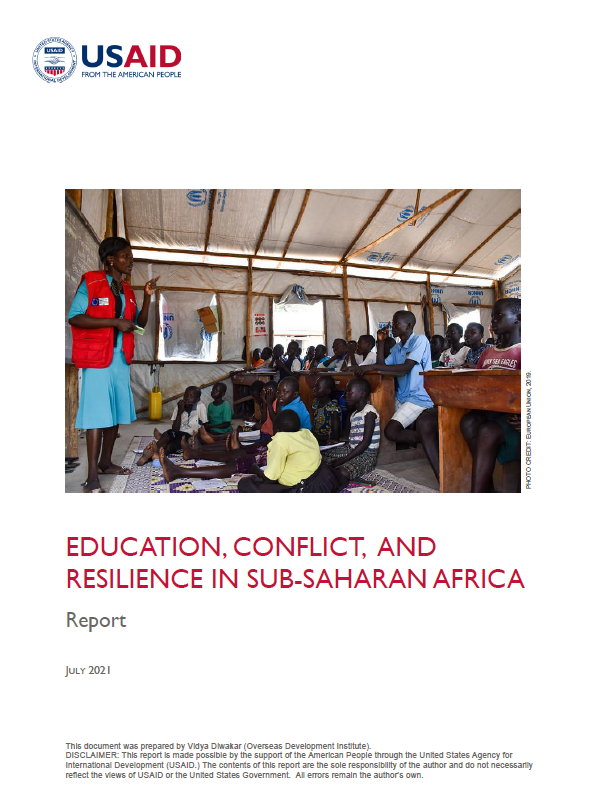
Education, conflict, and resilience in Sub-Saharan Africa: Report

The Sustainable Development Goals call for action in many areas relevant for girls and boys, not least quality education, but challenges in achieving progress may be aggravated by factors including poverty and armed conflict. Conflict has negative impacts on education, which can operate through a variety of supply- and demand-side channels. It can destroy infrastructure, displace students and teachers, and modify the returns to schooling, all of which can limit school enrolment (e.g. Akresh and de Walque 2008; Dabalen and Paul 2014; Serneels and Verporten 2012; Poirier 2012; Bertoni et al. 2019). Even in countries where primary school enrolment rates may be increasing, conflict can widen disparities in education access and contribute to the intergenerational transmission of poverty.

In this context, strengthening resilience capacities that can enable children living in conflict-affected areas to continue to access education is critical. USAID’s 2018 Education Policy recognizes that in order to strengthen resilience, “education in partner countries must have the capacity to embed effective approaches to improving learning and education outcomes, to innovate, and to withstand shocks and stresses” (USAID 2018, p. 17). Conflict is generally not a “shock” but more a social process, reflecting something structural and with a long time-dimension (though a single conflict event and its impact may be experienced as a shock locally). The ability to access education in contexts of protracted crises is critical.

This report examines the links between conflict, education, resilience and poverty dynamics in sub-Saharan Africa in a set of USAID Resilience Focus Countries. It relies on panel data from Ethiopia, Malawi, Niger, Nigeria, Uganda, and the Democratic Republic of Congo (DRC) to investigate the relationship between conflict and education, focusing on girls and boys in households on different poverty trajectories (see Box 1). It then builds on Diwakar et al. (2021) to examine the types of resilience capacities that can promote school access for children in conflict-affected areas. In doing so, the paper attempts to contribute to the knowledge base on the pathways through which conflict affects education differently for girls and boys in households on different poverty trajectories, and how resilience capacities of households and institutions can be supported to contribute to increased enrolment in situations of conflict and violence.

Author: Vidya Diwakar

The full report can be downloaded here

The associated brief can be downloaded here

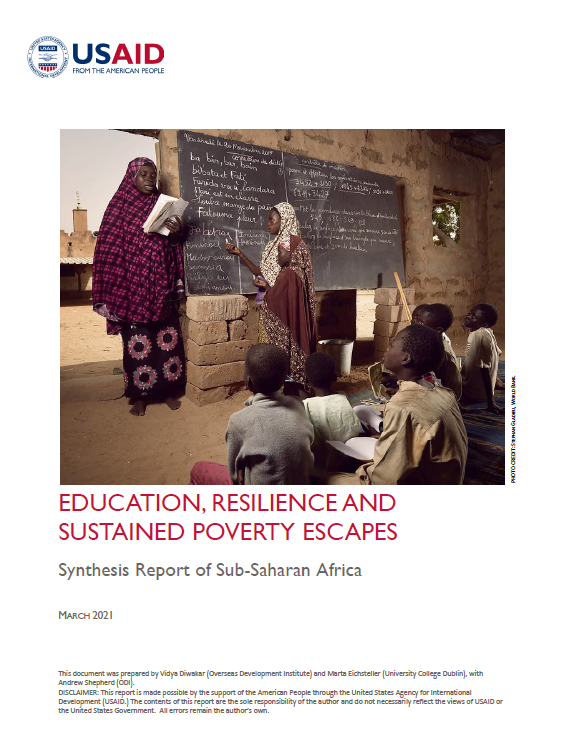
Education, resilience and sustained poverty escapes: Synthesis Report of Sub Saharan Africa

Resilience is defined as the “ability of people, households, communities, countries, and systems to mitigate, adapt to, and recover from shocks and stresses in a manner that reduces chronic vulnerability and facilitates inclusive growth” (USAID 2012, 5). While there have been important gains in poverty reduction internationally over the last two decades, there is a concurrent recognition that without nurturing resilience, these gains are fragile and may risk reversal in a multi-hazard context. Developing resilience is arguably a central component of ensuring sustained poverty reduction. A key way in which resilience can be strengthened is through education. In turn, resilience capacities can improve education outcomes. Combined together, sets of resilience capacities have the potential to contribute to sustained poverty reduction.

This paper analyzes this interrelationship between resilience, education, and sustained poverty reduction in sub-Saharan Africa. It synthesizes mixed-methods research by the Chronic Poverty Advisory Network (CPAN) to contribute to this knowledge base by focusing on data from Tanzania, Rwanda, Niger, Malawi, Ethiopia, Uganda, and rural Kenya, drawing out regional conclusions where possible, while also exploring country-level and intra-country differences. This study adopts a resilience framing to examine the potential for sustained development gains through poverty reduction, within a multi-hazard context. It focuses on the role of education as a resilience capacity, and other capacities improving education outcomes—both of which operate primarily at the adaptive and absorptive level (see Figure 1 and Table 1). It recognizes instances when education as a resilience capacity combines with certain resilience capacities improving education outcomes, which can have a transformative potential to drive escapes from poverty that are sustained over time.

Authors: Vidya Diwakar (Overseas Development Institute) and Marta Eichsteller (University College Dublin), with Andrew Shepherd (ODI).

The full report can be downloaded here

The associated brief can be downloaded here

A Qualitative Understanding of Poverty Dynamics in Zambia

This qualitative study, carried out from 2019 to 2020, describes poverty trajectories in Zambia, with a strong focus on the post-2010 period and on sustainable escape from poverty. There is limited qualitative research in Zambia on assessment of poverty dynamics that encompasses both drivers that support sustainable escapes from poverty and drivers of poverty descent. The importance of understanding these poverty dynamics, their geographical distribution and trends over time, as well as how they respond to policies and programmes, cannot be overemphasized. 

Under the leadership of Chronic Poverty Advisory Network (CPAN), and with funding from DFID, a research partnership between Zambart, LSHTM (UK), INESOR and CPAN conducted this qualitative component that was part of a broader study of Zambia Poverty Dynamics. The other broader study components included the analysis of two sets of survey data, namely the Rural Agricultural Livelihoods panel survey 2012-2015-2019 and the Living Conditions and Monitoring Survey 2010 & 2015. This was carried out by IAPRI (RALS) and INESOR (INESOR) respectively. Two other components provided modelling forecasting of poverty up to 2060, led by the University of Denver, and a political economy analysis, led by SAIPAR.  The mixed methods findings across all components are presented in a national report (see Shepherd and Bond et al., 2021). This report focuses on the qualitative component.

Authors: Virginia Bond, Joseph Simbaya, Chiti Bwalya, Lucia da Corta, Arthur M Moonga, Monde Mwamba, Lwiindi Gwanu, Marta Eichsteller, Phillimon Ndubani

Read the full report here

The role of agriculture in poverty escapes in Kenya – Developing a capabilities approach in the context of climate change

Rural poverty poses a significant developmental challenge in Kenya. Using a panel survey in rural Kenya and qualitative material from focus groups and life history interviews from the regions of Makueni and Vihiga, we investigate the changing role of how agriculture and farming practices have contributed to sustained escapes from poverty since 2000. In this study we analyse environmental, social and personal structures that facilitate conversion of agricultural strategies that enable poverty escapes in the context of climate change. Our study identifies that agriculture still forms an essential aspect of Kenyan households’ economic and social wellbeing. However, the study results indicate that links between accumulation of assets and poverty escapes are ambiguous, poor households find it problematic to convert agricultural strategies into a profit, and climate change shocks further exasperate these difficulties. We argue that constraints in conversion structures, such as limited infrastructure, and in conversion processes such as ongoing difficulties in land procurement and inheritance, unsustainable farming practices and continued lack of knowledge on climate-smart agriculture affect not only poverty escapes, but also the ability to adapt to and mitigate against environmental shocks. Development of conversion processes to improve existing conversion structures should be at the core of public interventions that seek to sustainably reduce poverty amidst climate change in rural Kenya.

This publication was authored by CPAN partners Marta Eichsteller, Tim Njagi, and Elvin Nyukuric, and was published in World Development journal.

Read full article here

Embed Block
Add an embed URL or code.

Understanding the dynamics of poverty in Rwanda

CRR.PNG

Overview

While poverty rates in Rwanda have fallen significantly since the 2000s, the latest estimates reveal a slowdown in the poverty reduction rate. This calls for a better understanding of poverty and poverty dynamics in the country. In this paper, we use the latest three waves of Rwandan panel data, collected in 2010/11, 2013/14 and 2016/17, to characterise the dynamics of poverty in Rwanda and explain the slowdown in poverty reduction. Our results show that education, health insurance, diversification of occupations within households and savings all promote escape out of poverty and prevent impoverishment. The Girinka Programme acts as a lift out of poverty, while business creation has protective effect against impoverishment. Observed trends of these variables, especially the increase in households depending on agriculture wages and the reduction of business owners at the household level, appear as important factors in the slowdown in poverty reduction in Rwanda.

Authors: ODI & IPAR

Download the paper here