The 'Resilience and Poverty Escapes' project aims to expand the understanding of the drivers of sustained and transitory poverty escapes across contexts and to draw out policy and programing implications. This project follows up on the work developed in 2016 by CPAN-ODI in the framework of the 'Investigating the dynamics and drivers of transitory poverty escapes' project, which examined the extent and nature of sustainable and transitory poverty escapes in three Feed the Future Initiative countries - Bangladesh, Ethiopia and Uganda ; and investigated how policies and programs can be designed and implemented to minimize, and if possible prevent, transitory escapes and in doing this contribute to sustained poverty reduction. This project was supported by USAID through the Leveraging Economic Opportunities activity.
This previous body of work raised a lot of interest within and outside of the agency, and confirmed the broader relevance of resilience beyond managing climatic shocks. As such it was suggested to broad the scope of the research to include seven additional countries selected on the basis of the Poverty Eradication Policy Preparedness Index (PEPPI), panel data availability and Feed the Future countries, as well as demand directly received from some countries. The seven focus countries of the research are then categorized as follows:
Full resilience and sustainable poverty escapes analysis across 3+ waves of data (Cambodia, Kenya, Nepal and the Philippines
Resilience and impoverishment analysis across 2 waves of data (Malawi and Niger)
Robust qualitative life history analysis on on-going resilience and sustainable poverty escapes work (Tanzania)
This work will build on the previous set of country cases methodology that comprise mixed-methods research combining analysis of existing household panel survey data with the collection of new qualitative data through focus group discussion and life histories, in line with CPAN methodology.
This report introduces the concept of ‘Growth from below’ and analyses policies and programmatic approaches that directly help people out of poverty through the informal economy, women’s economic empowerment and the inclusion of most marginalised groups, agriculture, the rural non-farm economy and migration.

The brief presents findings around health shocks and health as a resilience capacity from a series of 11 country studies on drivers of poverty dynamics in both Africa and Asia.
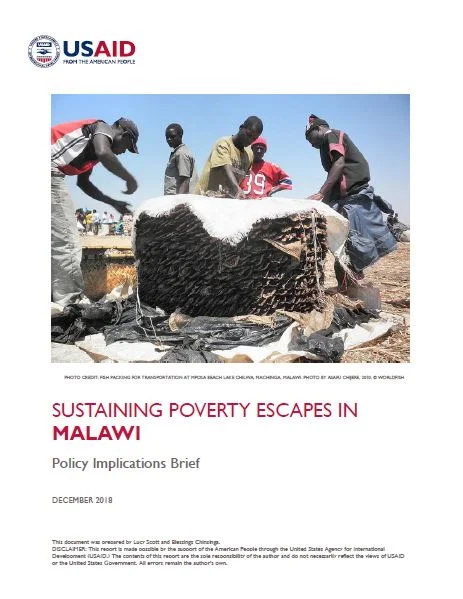
This brief draws on results of mixed methods research in Malawi, to offer policy and programming implications for sustained poverty reduction.
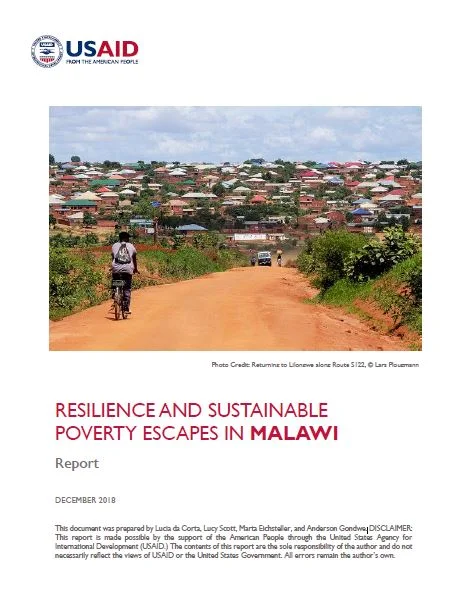
This research examined why some households in Malawi escape and remain out of poverty (sustainable poverty escape), while other households escape it only to fall back into poverty (transitory poverty escape) and still others descend into poverty for the first time (impoverishment).
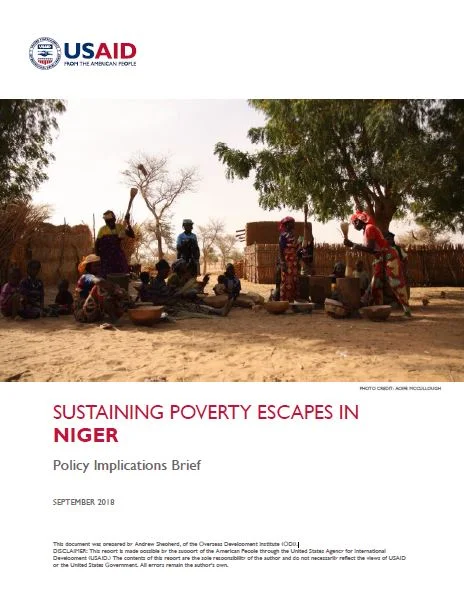
This policy brief highlights the policy recommendations to contribute to achieve sustained escapes out of poverty in Niger
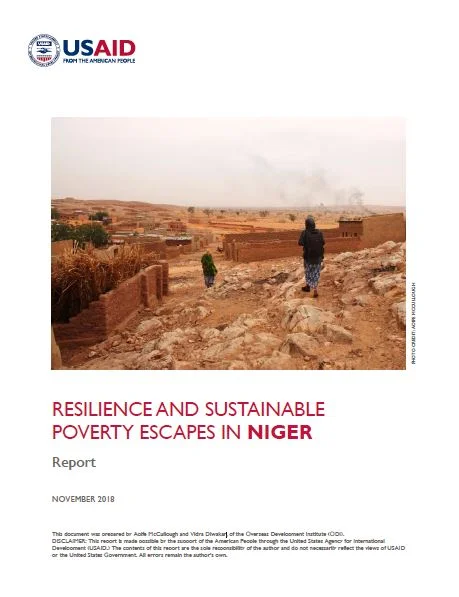
The focus of this report is on resilience and household poverty dynamics in Niger, specifically escapes and descents, with a focus on what explains why some households escape poverty and remain out of poverty, while other households escape poverty only to fall back into poverty.
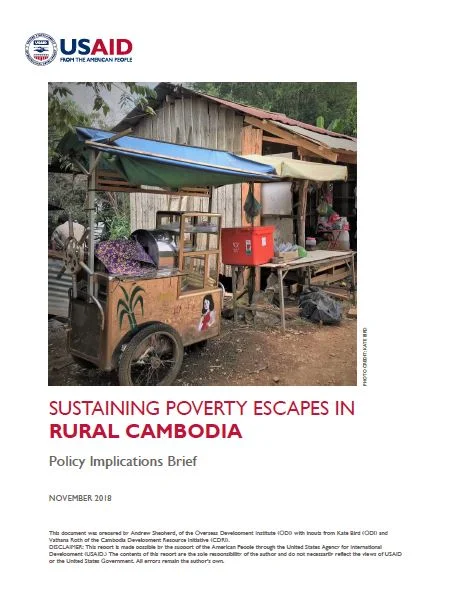
The focus of this brief is on what these findings may mean for interventions and approaches in Cambodia that aim to enable poor households to escape from poverty and to maintain that escape over time
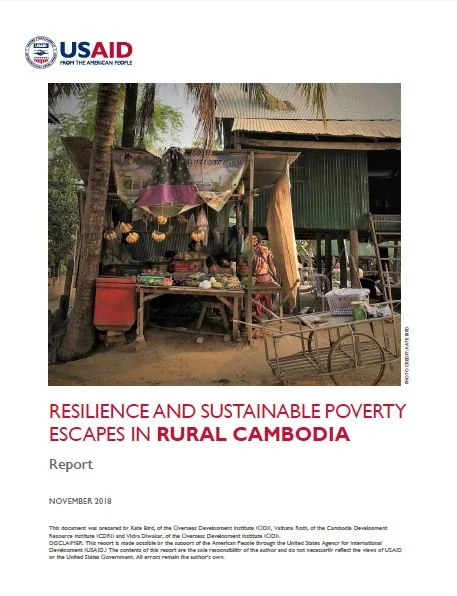
The focus of this report is on household poverty escapes in rural Cambodia and explains why some households escape poverty and remain out of poverty (sustainable poverty escape, or resilience), while other households escape poverty only to fall back into poverty (transitory poverty escape) and still other descend into poverty for the first time (impoverishment
The contribution of this paper is to establish knowledge of how and whether the observed economic growth in the past has been pro-poor and identify what are the enablers and constraints of poverty reduction in Rwanda.
The specific focus of this report is to analyse the movements of poverty and its linkages with economic growth for 2001-2010 period.
This study seeks to provide a detailed understanding of poverty dynamics in Malawi. This has not been done previously due to lack of nationally representative panel data.
This paper presents initial findings on the relationships between growth, growth incidence across the income distribution and those poverty dynamics in India, a set of relationships which has never previously been investigated.
This brief draws on results of mixed methods research in Tanzania, to offer policy and programming implications for sustained poverty reduction.
This report focuses on household poverty escapes in Tanzania and explains why some households escape poverty and remain out of poverty (sustainable poverty escape, or resilience), while other households escape poverty only to fall back into poverty (transitory poverty escape) or descend into poverty for the first time (impoverishment).
This policy brief draws on results of mixed methods research in the Philippines, to offer policy and programming implications for sustained poverty reduction.
This report investigates the drivers of sustained and transitory escapes from poverty in the Philippines

The focus of this brief is on what those findings may mean for interventions and approaches in Kenya that aim to enable poor households to escape poverty and remain out of it.
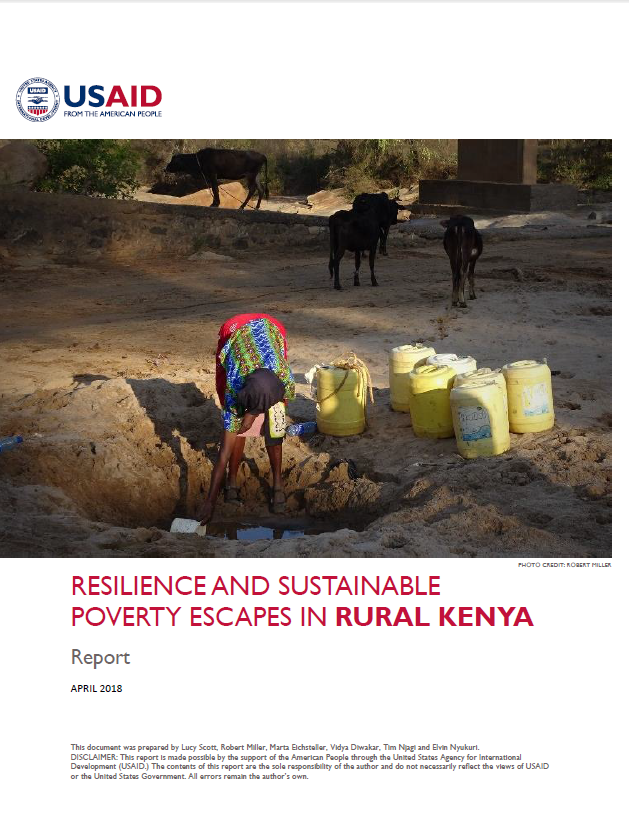
The report investigates the resources (land, livestock, and assets), attributes (household composition and education level), and activities (including jobs and engagement in non-farm activities) of households that enable them to escape poverty sustainably and minimise the likelihood of returning to living in poverty again
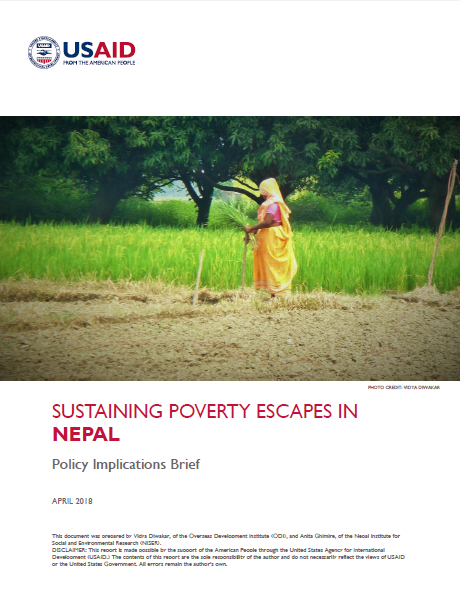
This brief draws on results of mixed methods research in Nepal to offer policy and programming implications for sustained poverty reduction and it advocates a portfolio response to poverty reduction that incorporates a sound understanding of poverty dynamics
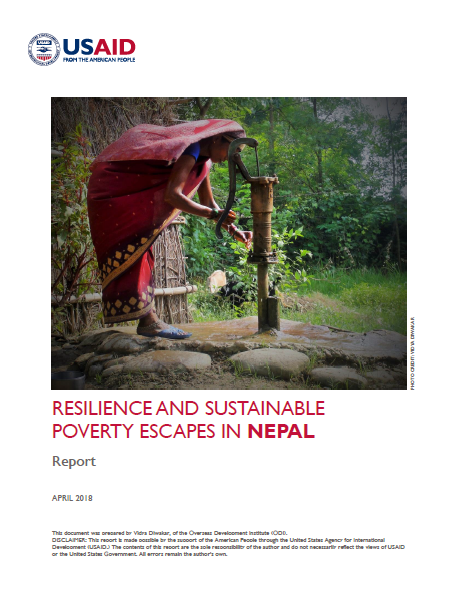
The focus of this report is on household poverty escapes and what explains why some households escape poverty and remain out of poverty, while other households escape poverty only to fall back into poverty and still other descend into poverty for the first time.
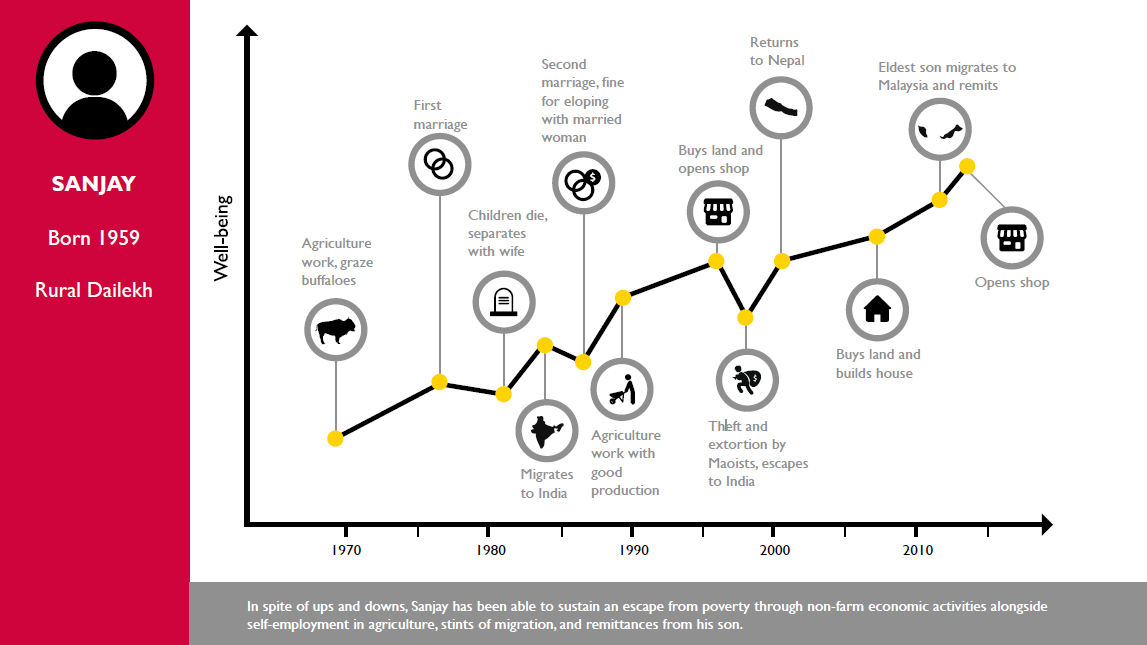
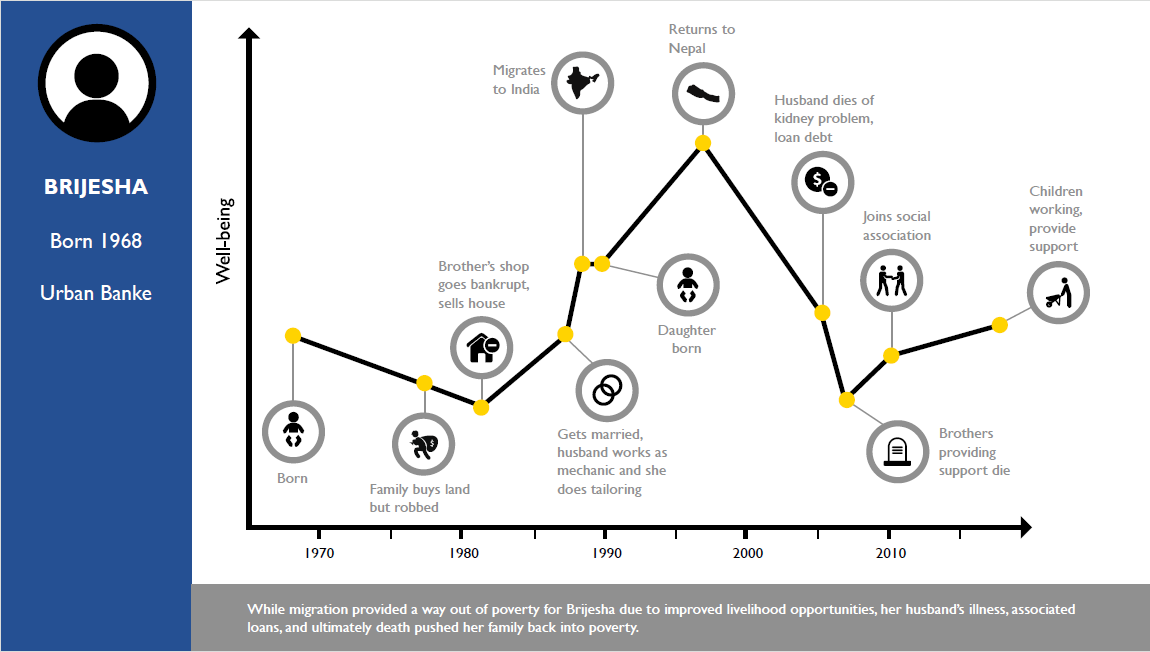
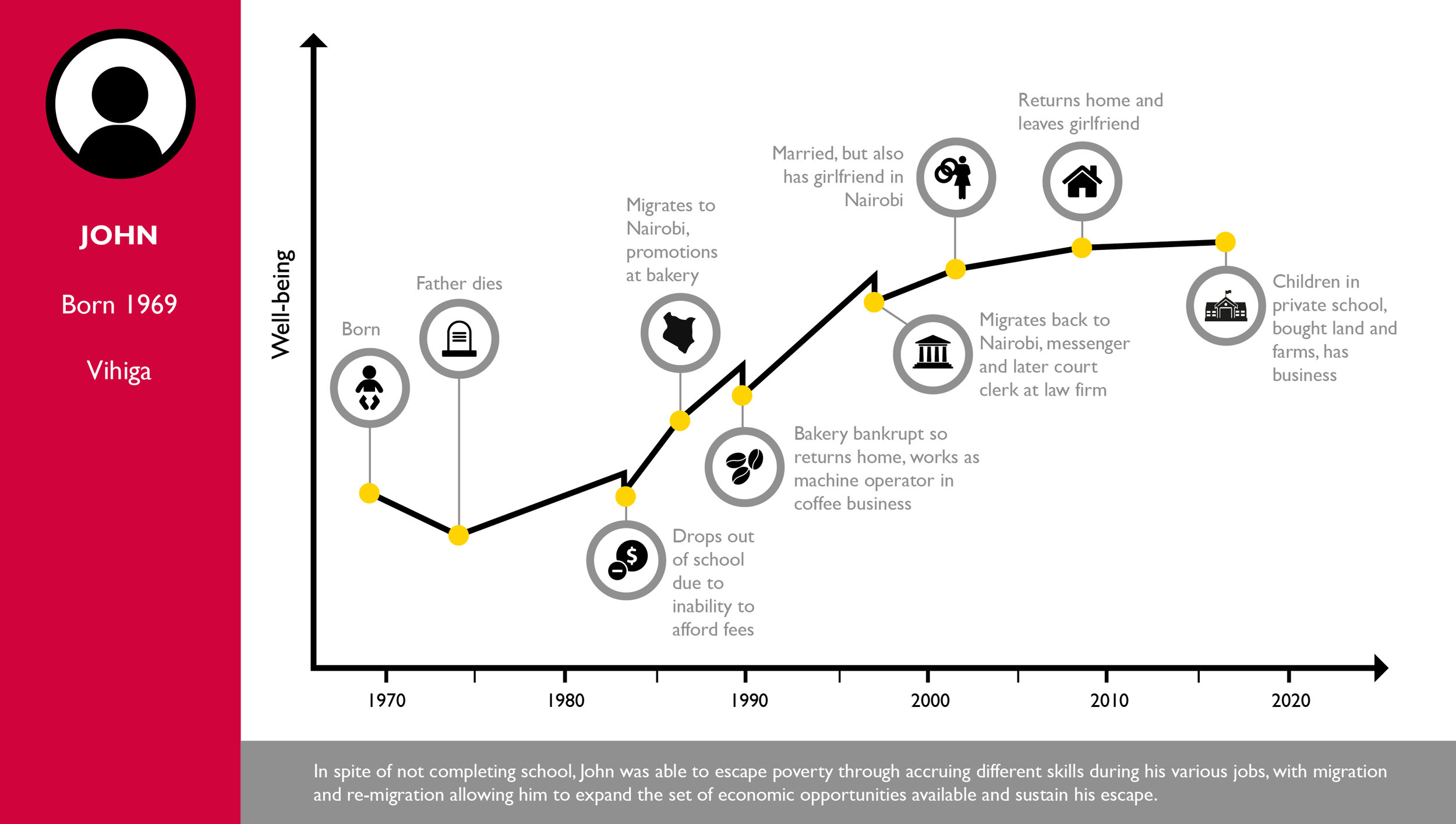
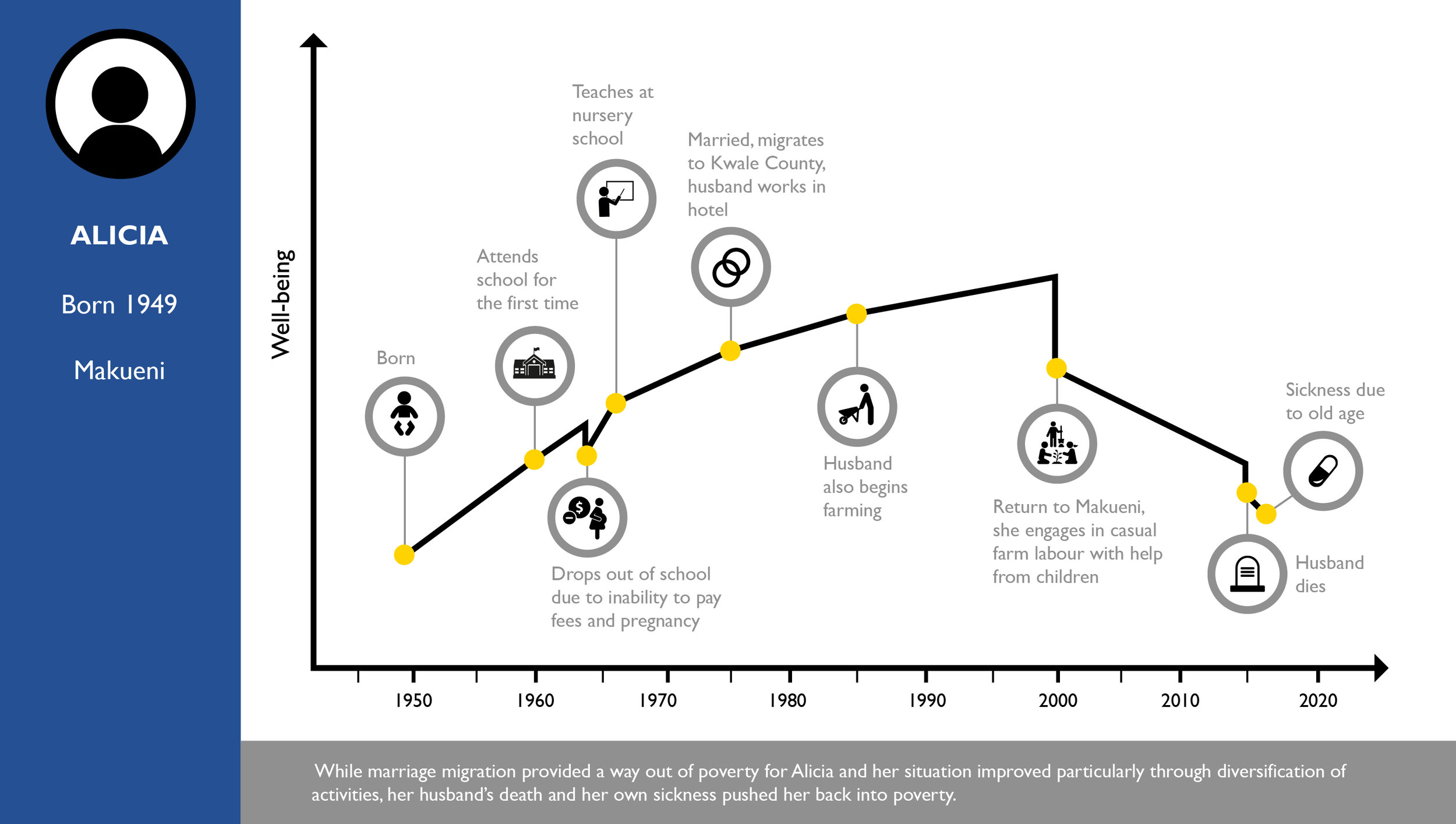
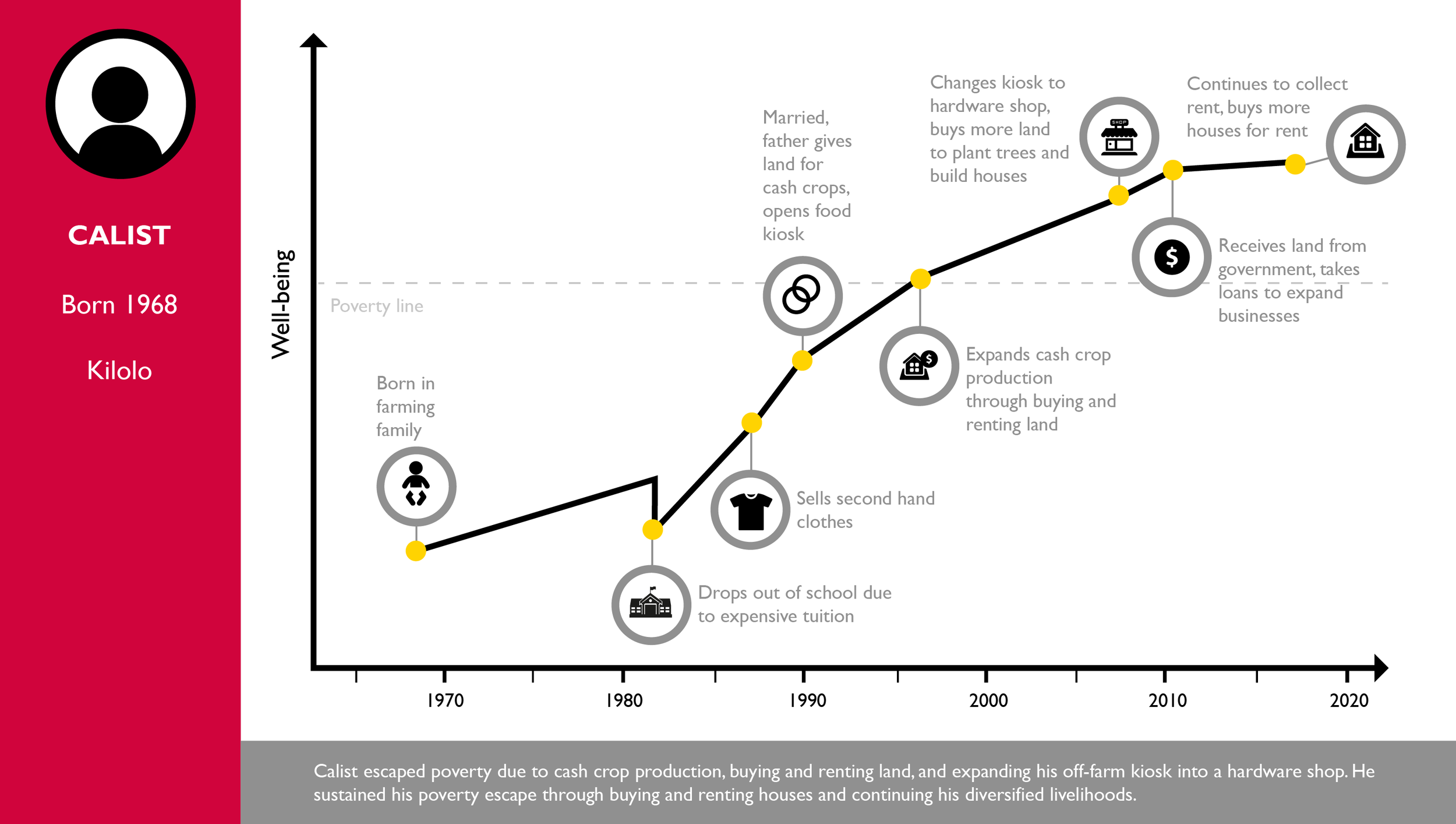
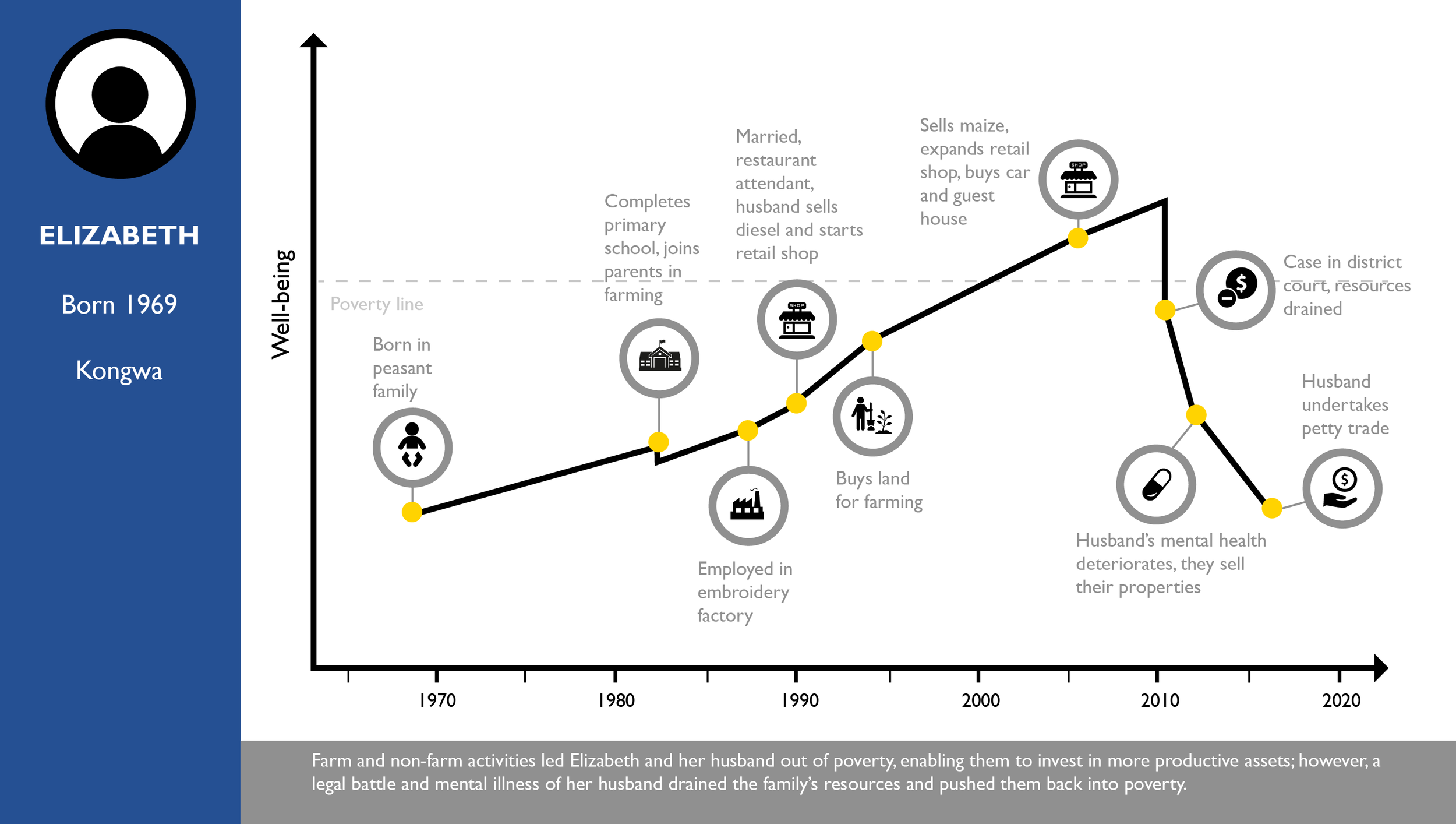
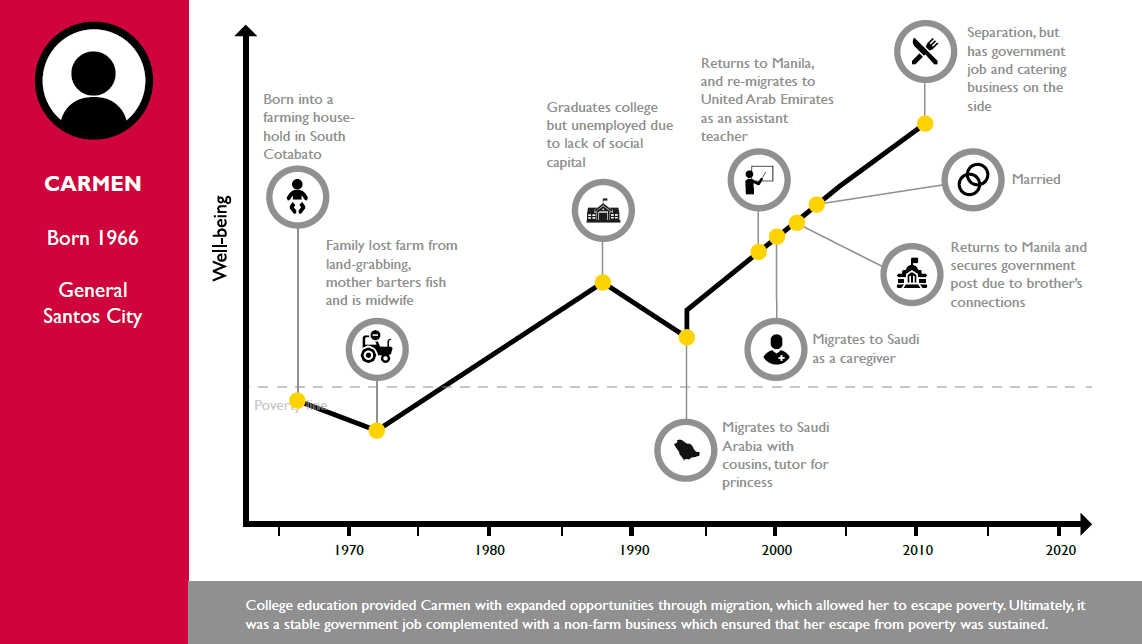
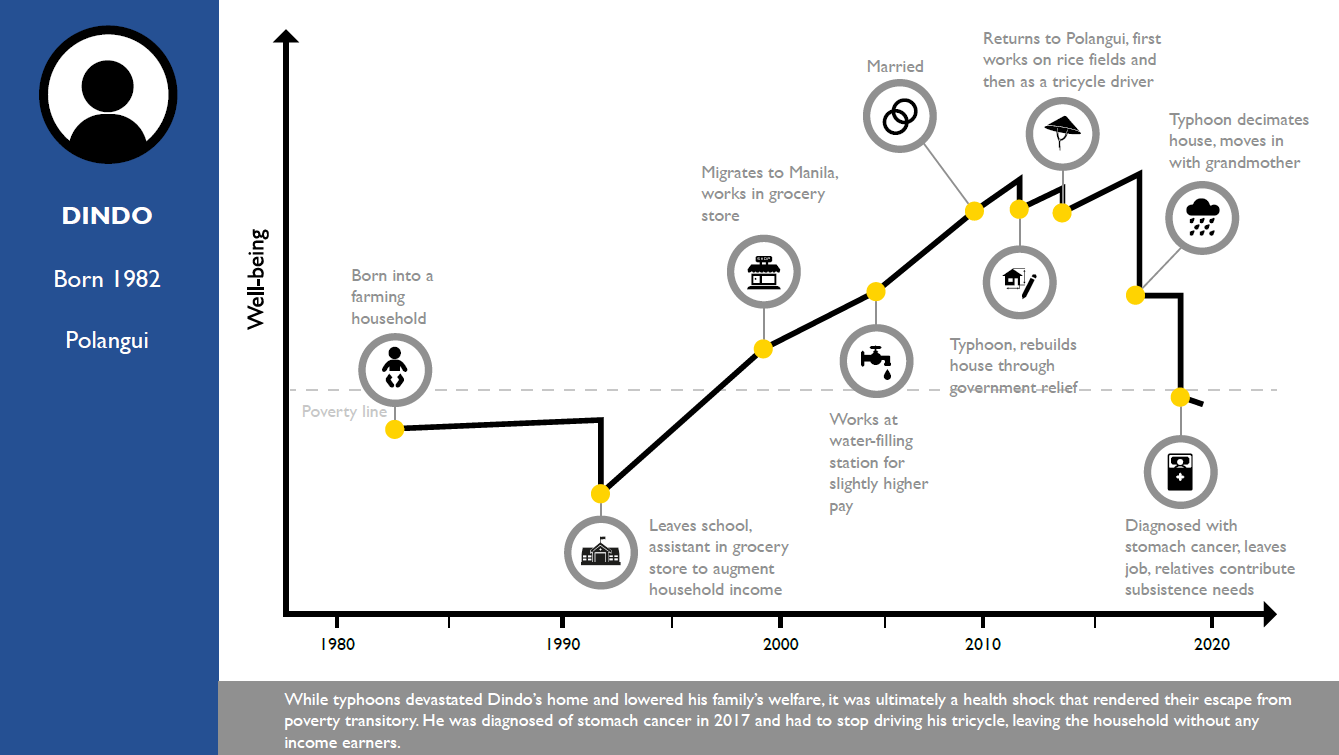
Info-graphics - Sustained and Transitory poverty escapes
This paper examines the politics of poverty reduction in Ethiopia, Tanzania and Rwanda using the political settlements framework. It discusses the extent to which the political settlement prevailing in any country influences the consistency and quality of policy making and the success or failure of anti-poverty policies and initiatives
To date, there is little knowledge about what differentiates a sustained escape from a temporary escape, or these from chronic poverty. The principal objective of this research is to develop an understanding of why some households managed to sustain their escapes out of extreme poverty while others fell back into poverty.
This study aimed to explore the factors that sustain escapes from poverty in Tanzania, including pathways out of poverty, the policies/programmes/strategies and institutions that sustain poverty escapes and create resilience, and the effect of political settlements in supporting and sustaining poverty escapes.
This study aimed to interrogate the common factors behind sustained escapes from poverty, as well as policy measures that supported such escapes in Ethiopia.
If we want to continue to reduce poverty in Rwanda, we have to look at the determinants of poverty in the country and generate new ways to tackle it, as well as continuing along existing paths, where appropriate. Identifying the determinants of poverty will help us to fight poverty in a sustainable way. This paper investigates how.
This study explores the nature of poverty dynamics in Tanzania using three waves of the Tanzanian National Panel Survey, spanning 2008 and 2013, and estimates the correlates for such dynamics
This study look at poverty dynamics in Tanzania under a qualitative approach.
This study aims to increase the understanding of the factors associated with impoverishment and sustained escapes from poverty and of how policies and programmes can support these escapes in Ethiopia.
This report presents the major findings of a qualitative study carried out in four selected areas of Ethiopia. The purpose of the study was to understand the factors in and processes related to sustained escape from poverty. It also aimed to establish the major political, economic and social contextual factors and changes that shape the pathways of different social groups.
The overall aim of this project is to increase our understanding of the factors associated with sustained escapes from poverty, of how policies and programmes can support these escapes and the political and institutional pre-conditions under which these policies can successfully be initiated.

This project is supported by
Photo credit: Malian refugees at Mentao camp, Burkina Faso; Pablo Tosco/Oxfam
Recent research by ODI CPAN, commissioned by the USAID Center for Resilience, investigated the resilience of households above the poverty line in Uganda and the Philippines.